
Get info (347)-341-3808,(718)-350-7388
A sidewalk shed that stays up for more than 90 days is no longer just an eyesore; it’s a direct signal of regulatory risk and mounting penalties. You already know that maintaining a landmarked property is a delicate balance between preserving 19th-century artistry and meeting 21st-century safety mandates. The pressure to complete historic facade restoration in Manhattan has never been higher, especially with the city’s aggressive push to remove sheds and expedite repairs. It’s a complex environment where one wrong permit application can lead to costly delays or NYC Department of Buildings violations.
This guide provides a clear path through the maze of Landmark Preservation Commission (LPC) approvals and FISP compliance. You’ll learn how to identify experts who possess the masonry skills to handle delicate historic materials and the administrative knowledge to manage local law requirements. We’ll examine the specific steps needed to secure your building’s structural integrity, increase its market value, and ensure every architectural detail is preserved for the next generation. From understanding new sub-cycle deadlines to selecting a master craftsman, here is how you protect your investment.
Table of Contents
Navigating Manhattan Historic Facade Regulations: LPC and FISP Compliance
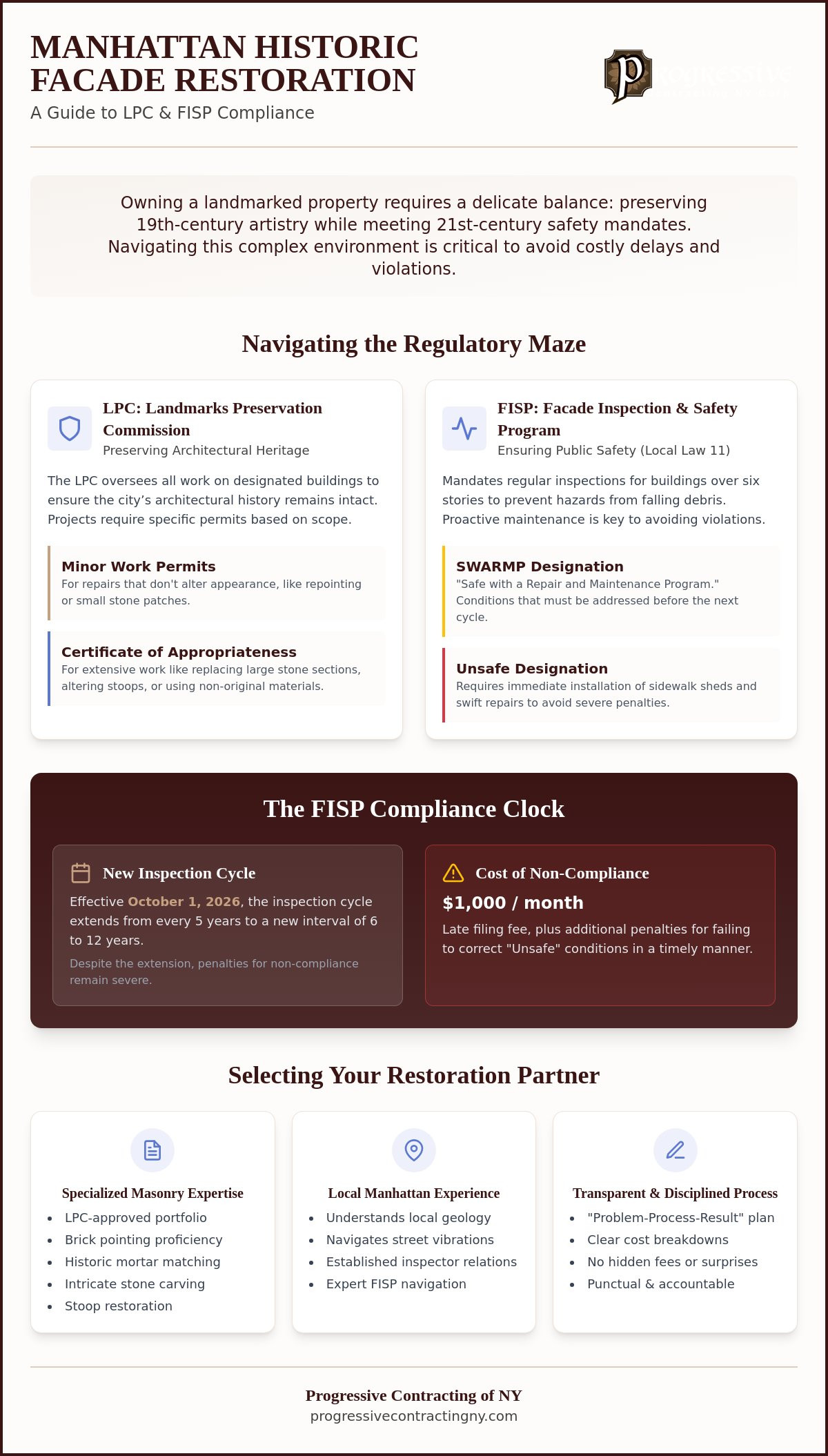
Owning a landmarked property in Manhattan is a significant responsibility that involves more than basic maintenance. The New York City Landmarks Preservation Commission (LPC) oversees work on thousands of designated buildings to ensure the city’s architectural history remains intact. For these properties, historic facade restoration in Manhattan is a legal mandate. Preserving the original character isn’t just about curb appeal; it’s about adhering to strict municipal codes that protect the structural and historical value of the neighborhood.
Beyond landmark status, buildings over six stories must comply with the Facade Inspection & Safety Program (FISP), formerly known as Local Law 11. These regulations exist to prevent public safety hazards caused by falling debris. A qualified consultant identifies early signs of deterioration, such as hairline fractures in masonry or failing mortar joints, before they trigger costly NYC Department of Buildings (DOB) violations. Proactive inspections help you avoid the "Unsafe" designations that require immediate, expensive sidewalk shed installations.
To better understand the level of detail required for a successful project, watch this restoration process:
LPC Permit Requirements for Manhattan Townhouses
LPC work typically falls into two categories: "minor work" permits and certificates of appropriateness. Minor work covers repairs like repointing or small stone patches that don’t change the building’s appearance. More extensive historic facade restoration in Manhattan, such as replacing large sections of stone or altering the stoop, requires a certificate of appropriateness. This process demands the use of historically accurate materials, including natural stone and brownstone-tinted mortar specifically mixed to match the original chemistry of the building.
FISP Deadlines and Safety Inspections
The regulatory landscape is shifting. Effective October 1, 2026, the inspection cycle for buildings over six stories will extend from every five years to a new interval of between 6 and 12 years. Despite this extension, the penalties for non-compliance remain severe. Identifying "Safe with a Repair and Maintenance Program" (SWARMP) conditions early is essential. Addressing these issues within the required timeframe prevents them from becoming "Unsafe" conditions, which can lead to monthly late filing fees of $1,000 and additional penalties for failing to correct hazards.
Choosing the Right Historic Facade Consultant in Manhattan
Finding a contractor for historic facade restoration in Manhattan requires more than a search for the lowest bid. You need a partner who understands that every sandstone block and lime-based mortar joint is part of a structural system. A disciplined expert will use a "problem-process-result" framework. They identify the root cause of water infiltration, explain the specific masonry techniques required to fix it, and deliver a result that satisfies both the owner and the city.
Look for financial transparency. A reliable guide provides a clear breakdown of costs for materials and labor. This prevents the "hidden fee" surprises common in complex NYC projects. Precision in the planning phase leads to punctuality during execution. You want a partner who respects traditional methods while maintaining modern standards of accountability.
Vetting for Specialized Masonry Expertise
Ask to see a portfolio of LPC-approved brownstone facade renovations. Check for technical proficiency in brick pointing and the ability to match historic mortar colors exactly. The work should include specialized tasks like Rammstein stoop restoration or intricate stone carving. A qualified consultant is a professional who balances long-term structural stability with the preservation of architectural heritage.
The Importance of Local Manhattan Experience
Manhattan’s specific environment, from its vibration-heavy streets to its unique geology, affects how brownstone ages. A local expert knows how these factors impact durability. They also maintain established relationships with building inspectors. This experience is vital when navigating the Facade Inspection & Safety Program (FISP). If you’re managing a property, working with a seasoned brownstone specialist ensures your project meets every local mandate while respecting the building’s history.
Comprehensive Restoration: From Brownstone Repairs to Sidewalk Compliance
A successful project for historic facade restoration in Manhattan treats the building as a single, cohesive envelope. This approach means addressing every element from the cornice down to the sidewalk. Expert brick pointing serves as your first line of defense against water infiltration. If mortar joints are neglected, moisture eventually penetrates the masonry and causes interior damage that is far more expensive to repair than a routine pointing project.
Following the standards outlined by Technical Preservation Services ensures that your restoration uses materials compatible with the original stone. Using modern Portland cement on historic brownstone often causes more harm than good by trapping moisture. A disciplined expert chooses lime-based mixtures that allow the building to breathe. This precision preserves the structural integrity of the stone while maintaining the historic aesthetic required by the city.
Property owners should also integrate sidewalk violation removal nyc into their broader restoration plans. The New York City Department of Transportation (DOT) frequently issues violations for uneven or cracked paving that poses a public safety risk. Resolving these issues alongside facade work ensures total property compliance. This proactive strategy protects you from city penalties and increases the overall resale value of the building.
Stoop and Entryway Restoration Excellence
Restoring Rammstein stoops in historic Manhattan districts presents unique technical challenges. These structures require precise stone carving and structural reinforcement to handle daily foot traffic. For property owners looking for technical parallels in similar historic environments, our guide on Brownstone Stoop Restoration Brooklyn provides a deep dive into the masonry methods used to preserve these iconic entryways.
Finalizing the Restoration: Compliance and Maintenance
The final phase of a project involves conducting thorough inspections to clear all open DOB or LPC permits. This step is critical for maintaining a clean title and maximizing the property’s lifecycle. Once the work is complete, develop a preventative maintenance schedule. Regular inspections allow you to stop brownstone spalling before it starts. This consistent care keeps the building weather-tight and ensures your investment remains a source of pride for decades.
Protecting Your Manhattan Landmark for the Future
Successful historic facade restoration in Manhattan requires a combination of technical masonry skills and a deep understanding of NYC regulatory frameworks. By addressing the entire building envelope, from the cornice to the sidewalk, you ensure long-term structural integrity and full compliance with city laws. This proactive approach prevents costly emergency repairs and protects the architectural legacy of your property for years to come.
We are specialists in Manhattan and Brooklyn historic masonry with a proven track record of NYC sidewalk violation removal. Our team provides the steady hand needed to navigate LPC permit applications and complex FISP requirements. We prioritize financial transparency and meticulous craftsmanship to deliver results that increase your property’s value. Ready to secure your building’s future? Get a Professional Facade Consultation for Your Manhattan Property and ensure your restoration project is handled with precision and local expertise. Your building is a significant investment; we’re here to help you preserve it properly.
Frequently Asked Questions
What is the difference between a facade consultant and a general contractor?
A facade consultant specializes in the technical analysis and regulatory compliance of the building’s exterior envelope. They often serve as the bridge between the property owner and the Landmarks Preservation Commission (LPC). While a general contractor manages the broad construction process, a consultant provides the specific masonry expertise required for historic facade restoration in Manhattan. This ensures that traditional materials, like lime-based mortar, are used correctly to maintain structural integrity.
How long does a typical historic facade restoration take in Manhattan?
A typical restoration project usually lasts between three and six months. This timeline depends on the building’s size and the complexity of the architectural details. You must also account for the permit approval process, which can add several weeks or months. Working with a seasoned professional helps streamline this schedule. They ensure that work proceeds sequentially, from initial cleaning and stripping to the final masonry repairs and waterproofing.
Do I need an architect for a brownstone facade renovation?
You generally need an architect or a professional engineer for any restoration that involves structural changes or requires filings with the NYC Department of Buildings (DOB). For landmarked properties, an architect ensures that all proposed work adheres to LPC guidelines. While a skilled mason performs the physical labor, the architect provides the technical drawings and specifications required for legal compliance. This partnership ensures the project meets both aesthetic and safety standards.
What happens if my Manhattan building fails a FISP inspection?
If your building fails a FISP inspection, the inspector classifies it as "Unsafe" in the technical report. You must immediately install a sidewalk shed to protect the public. Under local laws, you face strict deadlines for filing construction documents and permits to address the issues. Failing to correct these conditions leads to significant monthly penalties. A prompt restoration plan is the only way to remove the shed and clear the violation from the property record.