
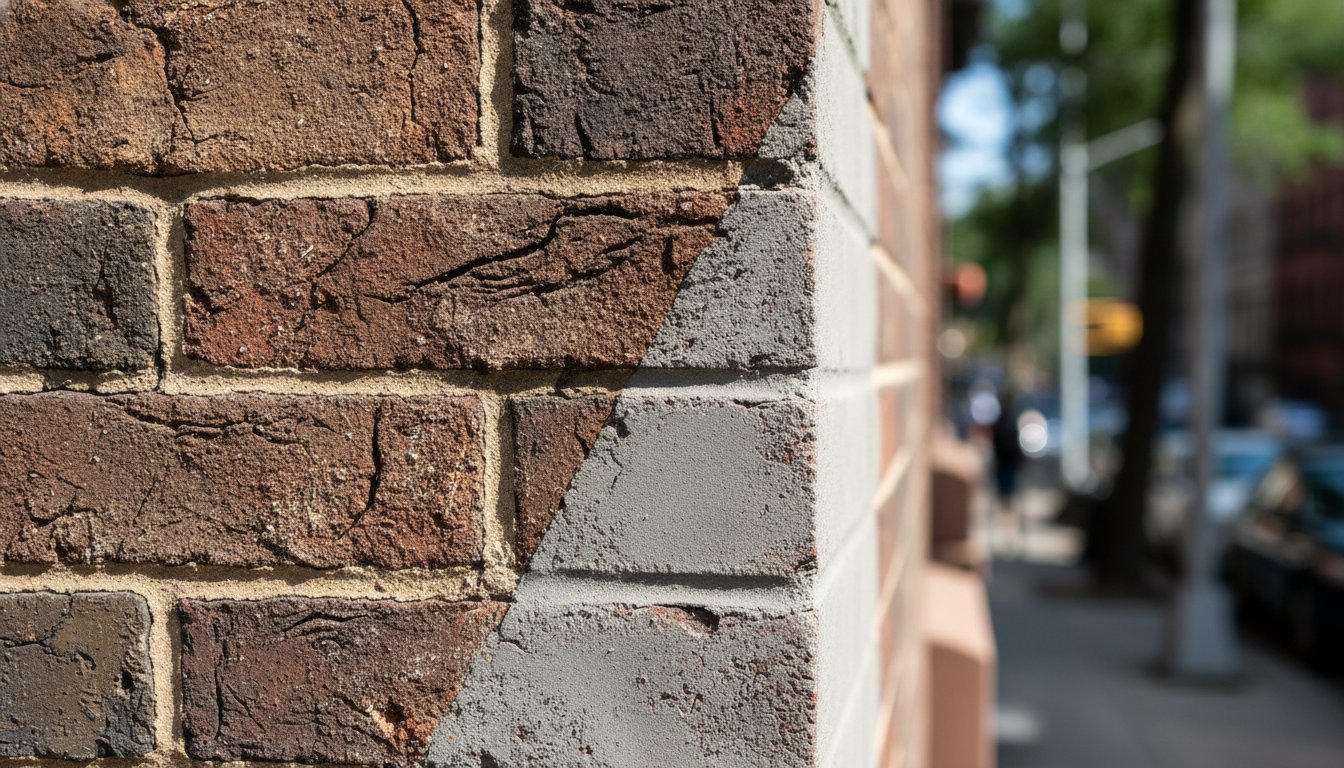
Did you know that Brooklyn and Manhattan facades endure between 30 and 50 freeze-thaw cycles every year? This relentless weather pattern quietly turns solid mortar into dust, leaving your property vulnerable to the elements. As a NYC homeowner, you likely worry about the high cost of facade restoration or the risk of water damage hidden behind your historic brickwork. It’s stressful to see crumbling joints and wonder if your home’s structural integrity is at stake.
Understanding the early signs you need brick repointing is the most effective way to prevent a minor maintenance task from becoming a full scale construction project. This guide will teach you how to identify mortar deterioration before it leads to costly water infiltration or structural failure. We’ll walk through a seven point checklist to help you self-diagnose your masonry health and understand when it’s time to consult a specialist in historic Brooklyn masonry. By catching these issues early, you can protect your investment and maintain the character of your building for decades to come.
Visual Checklist: The Most Common Signs of Mortar Decay
Identifying the signs you need brick repointing begins with a simple visual inspection of your facade. You don’t need to be a masonry expert to spot the early warnings of decay. Most homeowners in Park Slope or Bed-Stuy can detect these issues by looking for specific irregularities in their brickwork. Before diving into the checklist, it helps to understand what is brick repointing? and how it serves as your building’s primary defense against water.
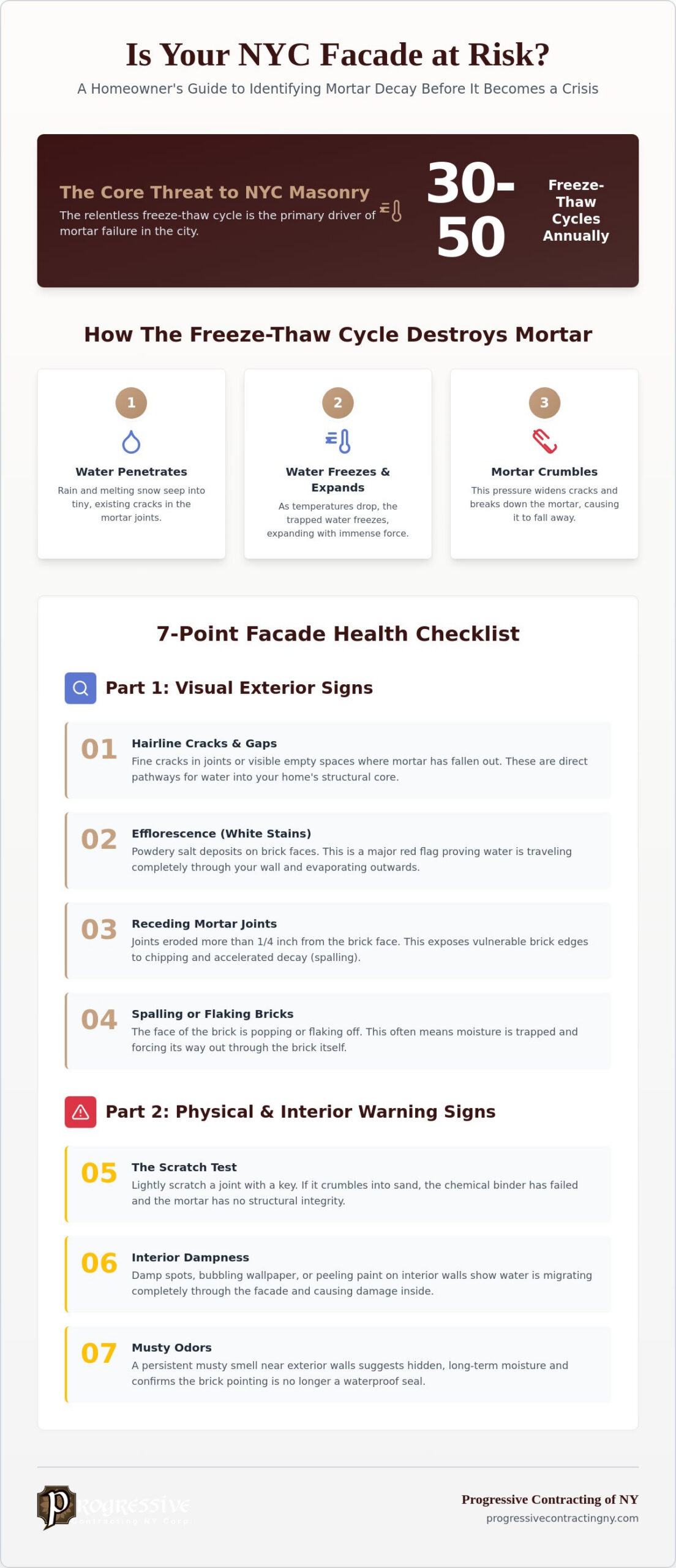
Look for fine hairline cracks running through the mortar joints. These are different from structural cracks that split the bricks themselves. Mortar cracks usually suggest that the joint has become brittle and can no longer handle the natural expansion and contraction of the building. If you see empty spaces or visible gaps where mortar should be, the material has already reached its breaking point and washed away. This leaves your home’s structural core exposed to the elements.
Efflorescence and White Staining
White, powdery deposits on your brickwork are known as efflorescence. These are mineral salts left behind when water evaporates from the masonry. While the powder itself is not harmful, its presence is a major red flag. It proves that water is successfully traveling through your wall. This signals that the mortar barrier has already failed, allowing moisture to reach the interior of the brick where it can cause hidden damage during NYC’s intense freeze-thaw cycles.
Mortar Erosion and Receding Joints
Mortar should ideally sit near the face of the brick to shed water effectively. When you notice joints have receded more than 1/4 inch from the brick face, you have significant material loss. This often creates a “shadow line” effect, where deep recesses make the bricks appear to be floating without support. This erosion leaves the edges of your bricks exposed to chipping and “spalling.” Addressing these receding joints early prevents the need for more expensive brownstone repair or full facade reconstruction later on.
Physical Tests and Interior Warning Signs
Visual inspections provide a strong starting point, but physical interaction with your masonry offers more certainty. One of the most reliable signs you need brick repointing involves testing the actual strength of the mortar joints. NYC facades face heavy vibration from subways and street traffic, which can accelerate the loosening of already weakened material. You should pay close attention to high-exposure areas like chimneys or parapets where the wind and rain are most aggressive.
Conducting a Manual Scratch Test
You can perform a simple diagnostic check using a common household tool like a key or a flathead screwdriver. Select a suspicious joint and apply light pressure. If the mortar crumbles easily into sand or dust, the chemical binder has likely washed away. This loss of cohesion means the joint can no longer support the weight of the wall or effectively block moisture. When planning repairs, follow the National Park Service guidelines for historic masonry. These standards emphasize using a mortar mix that is softer than the brick to prevent the bricks from cracking under pressure.
Watch for “spalling” during your walk-around. This occurs when the outer face of the brick begins to flake or pop off. It often happens when moisture gets trapped behind a hard, non-breathable mortar patch. If the water cannot escape through the joint, it forces its way through the brick face instead. Check your chimney. Loose or shifting bricks in these elevated areas are a serious safety concern and require immediate attention.
Interior Indicators of Exterior Failure
Many homeowners overlook the connection between interior wall damage and exterior masonry health. Look for damp spots, bubbling wallpaper, or peeling paint on the inside of walls that face the street or backyard. These symptoms suggest that water is migrating entirely through the facade. A musty smell in a front parlor or bedroom often indicates that your brick pointing is no longer serving as a waterproof seal. If you notice these interior warnings, the exterior protection has already failed. A seasoned masonry contractor can help you determine the exact entry point of the moisture before the damage spreads to your floor joists or plasterwork.
Why NYC Weather Makes Timely Repointing Essential
New York City presents a unique set of challenges for historic masonry. While buildings in milder climates might go decades without attention, NYC properties face a punishing environment. Identifying the signs you need brick repointing is not just about aesthetics; it is about preventing the structural failure that results from our local weather patterns. In neighborhoods like Park Slope and Bedford-Stuyvesant, the combination of aged brick and extreme temperature swings creates a constant state of stress for your facade.
The NYC Freeze-Thaw Cycle
Our city experiences between 30 and 50 freeze-thaw cycles every single winter. This process is the primary driver of mortar failure. When rain or melting snow enters small cracks in your mortar, it settles deep within the wall. As temperatures drop, that water freezes and expands. This expansion exerts immense internal pressure, physically pushing the bricks apart and widening the gaps. Each cycle weakens the bond further until the mortar simply falls away. Ignoring these small cracks now ensures that next winter will cause significantly more damage to your home’s exterior.
Choosing a Specialist for Historic Restoration
Restoring a historic NYC building requires more than just filling gaps with modern cement. Many general contractors use hard Portland cement, which is a mistake for older buildings. Historic bricks are often softer than modern ones. If you use a mortar that is harder than the brick, the brick will eventually crack or “spall” because it cannot expand. A specialized masonry contractor in Brooklyn understands the necessity of using lime-based mortars that mirror the original construction. Progressive Contracting of NY focuses on these traditional methods to ensure your facade remains breathable and flexible. Taking a proactive approach now prevents the need for a full facade reconstruction, which is a much more invasive and expensive process. We help you navigate these repairs with transparency and technical precision, protecting your property for the long term.
Protect Your NYC Property with Proactive Masonry Care
Maintaining a historic NYC home requires vigilance and a clear understanding of the signs you need brick repointing. By identifying receding mortar joints, surface efflorescence, and interior damp spots early, you avoid the high costs of full facade reconstruction. NYC weather is unforgiving; however, a well-maintained exterior ensures your property remains structurally sound and weather-tight for years to come. Your home’s facade is its first line of defense, and keeping it in top condition is a smart investment in its longevity.
Progressive Contracting of NY specializes in expert brownstone and brick restoration throughout Brooklyn and Manhattan. As historic masonry specialists, we provide transparent, project-based communication to guide you through the restoration process. We focus on precision and durability to give you total peace of mind. Don’t wait for the next winter cycle to cause more damage to your masonry joints.
Request a Professional Facade Inspection from Progressive Contracting today to secure your building’s future. We are ready to help you preserve the character and integrity of your historic home with reliable, expert care.
Frequently Asked Questions
How often does a brick house need to be repointed in NYC?
Most brick buildings in NYC require full repointing every 30 to 40 years. However, the city’s unique climate, which includes 30 to 50 freeze-thaw cycles annually, often necessitates spot repairs much sooner. Regular inspections help identify the early signs you need brick repointing before moisture penetrates the building’s core. If your property sits on a high-exposure corner lot, you may need to address specific elevations every 15 to 20 years.
Can I repoint my own brick house or do I need a professional?
While homeowners can handle minor cosmetic repairs, professional intervention is essential for historic NYC properties. Using the wrong mortar mix, such as modern Portland cement on old lime-based joints, causes permanent damage to the bricks. Additionally, NYC regulations and safety requirements for scaffolding make hiring a professional masonry contractor the safer and more compliant choice. Experts ensure the new mortar matches the original strength and breathability of your historic facade.
What happens if I ignore crumbling mortar joints?
Ignoring crumbling mortar leads to progressive structural damage and expensive repairs. When mortar fails, water enters the wall and expands during winter freezes. This process eventually pushes bricks out of alignment and causes them to loosen. Moisture also triggers interior issues like mold, wood rot in floor joists, and ruined plasterwork. What starts as a standard maintenance project can quickly escalate into a full facade reconstruction if left unaddressed.
Is brick repointing the same as tuckpointing?
No, these are two different techniques with distinct goals. Repointing is the functional process of removing damaged mortar and replacing it with new material to restore structural integrity and water resistance. Tuckpointing is a decorative method that uses two different colors of mortar to create the illusion of very fine, perfect joints. While both improve a building’s appearance, repointing is the essential maintenance task required to protect your home from NYC’s harsh weather.