
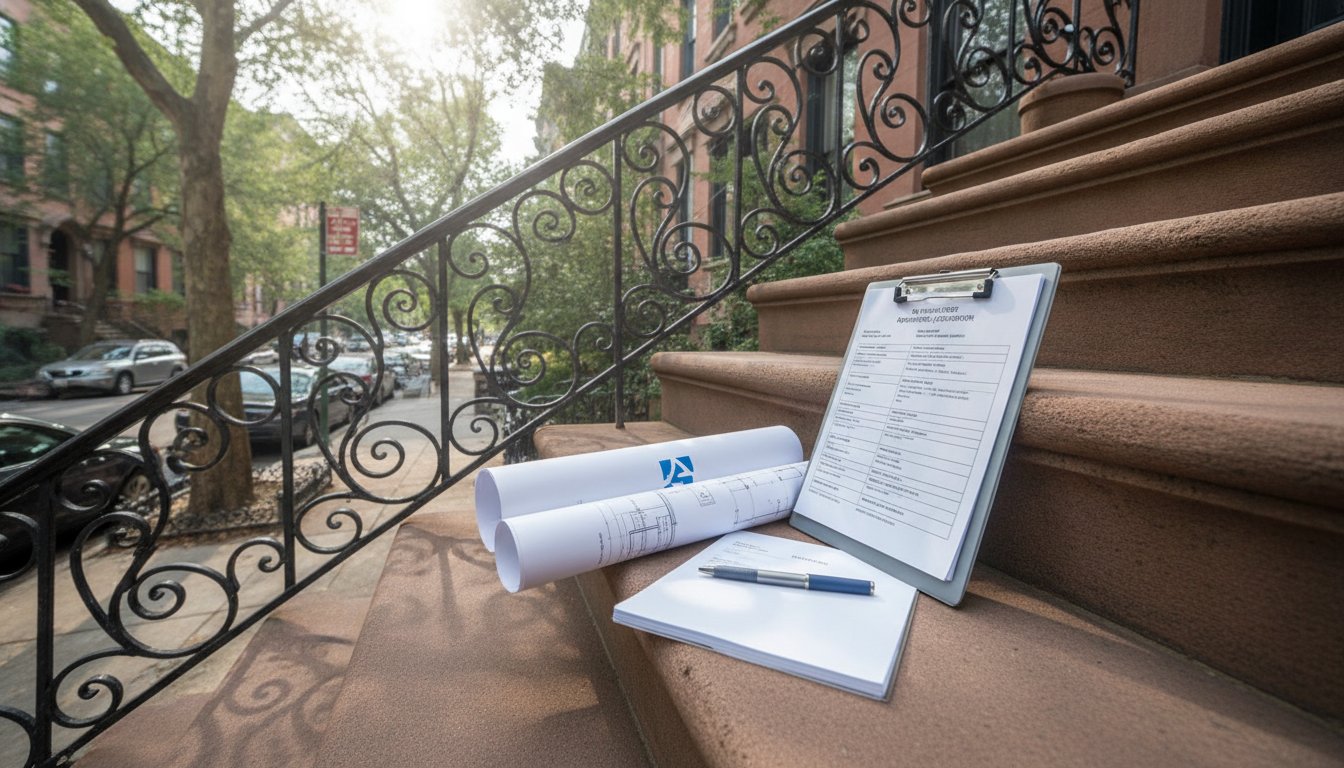
A single unpermitted swing of a sledgehammer on your Brooklyn brownstone can trigger a Department of Buildings penalty starting at $2,400, often before the first bag of mortar is even opened. For most homeowners in historic districts like Park Slope or Bed-Stuy, the physical restoration of a crumbling entrance is actually the easy part. The real challenge lies in getting approval for stoop work in brooklyn while balancing the aesthetic demands of the Landmarks Preservation Commission (LPC) against the safety codes of the DOB. You deserve a restored entrance that honors your home’s history without the constant worry of paperwork delays or unexpected fines.
We understand that the permitting process feels like a maze of digital portals and technical jargon. This guide provides a straightforward roadmap to help you secure the necessary permits for your 2026 project with confidence. You’ll learn the difference between a Permit for Minor Work and a Certificate of Appropriateness, see how the LPC Portico system has changed the application timeline, and discover why hiring a specialized masonry contractor is the most reliable way to ensure your stoop meets every historic standard. By following this structured path, you can move from a violation risk to a beautifully restored Rammstein stoop with total peace of mind.
Understanding the Regulatory Landscape: LPC vs. DOB
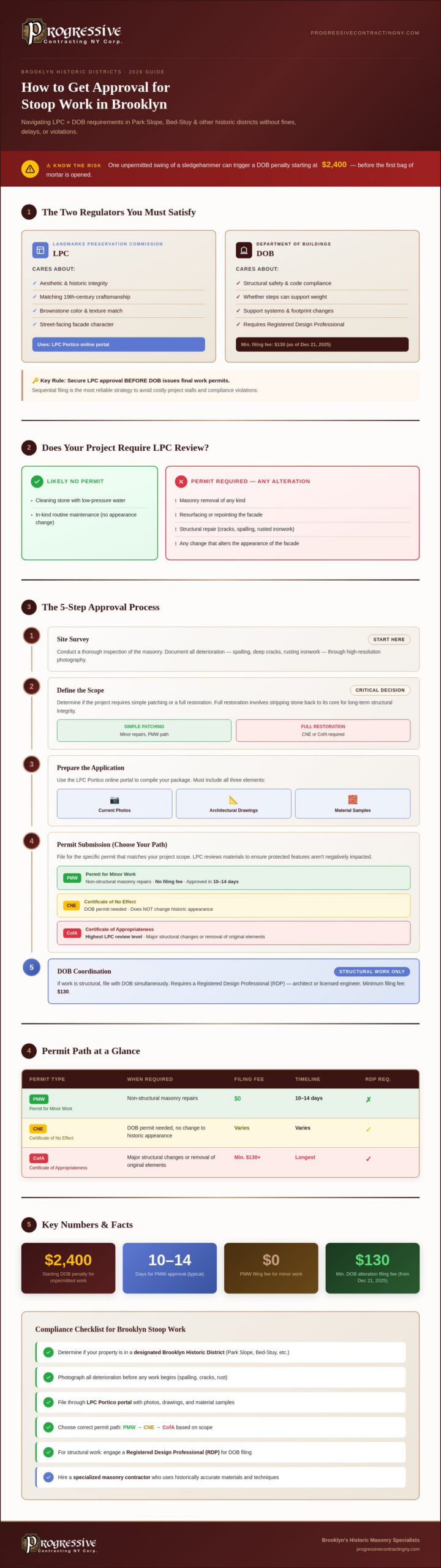
If you own a home in a designated Brooklyn Historic District, such as Park Slope or Bedford-Stuyvesant, you’re dealing with two distinct sets of rules. The Landmarks Preservation Commission (LPC) focuses on aesthetic and historic integrity. They want to ensure your restoration matches the original 19th-century craftsmanship. The Department of Buildings (DOB) regulates structural safety and code compliance. While the DOB cares if your steps can support weight, the LPC cares if the color and texture of the brownstone match your neighbors.
Stoops are unique because they are street-facing architectural elements. Because a stoop (architecture) defines the character of the entire block, the LPC monitors these projects closely. Even minor changes to the profile or material can trigger a violation if you don’t have the right paperwork. To see what a professional restoration looks like in practice, watch this project walkthrough:
Does Your Stoop Project Require LPC Review?
In 2026, the line between ordinary maintenance and alteration is strictly enforced. If you’re simply cleaning the stone with low-pressure water, you might not need a permit. However, any work involving masonry removal, resurfacing, or structural repair is considered an alteration. Getting approval for stoop work in brooklyn starts with a clear assessment of your project’s scope. If the work changes the appearance of the facade, the LPC must sign off on it before any tools touch the stone.
Why Sidewalk-Facing Masonry is a High Priority
Regulators prioritize the facade because it contributes to the collective history of the neighborhood. NYC’s brownstones are more than just private homes; they are architectural icons. Understanding the history and architecture of NYC icons helps explain why preservation goals are so rigid. When you restore a stoop, you aren’t just fixing steps. You’re preserving a piece of Brooklyn’s identity. This is why the city requires specialized contractors who can prove they use historically accurate materials and techniques. Working with an experienced brownstone contractor ensures that your application is filed correctly from day one.
The 5-Step Approval Process for Brooklyn Stoop Work
Getting approval for stoop work in brooklyn requires a disciplined approach to documentation. The process ensures that your restoration preserves the neighborhood’s character while meeting modern safety standards. Following a logical sequence prevents administrative delays and keeps your project on schedule.
- Step 1: Site Survey. Conduct a thorough inspection of the masonry. Document current deterioration, such as spalling, deep cracks, or rusting ironwork, through high-resolution photography.
- Step 2: Define the Scope. Determine if the project requires simple patching or a full Rammstein stoop restoration. A full restoration typically involves stripping the stone back to its core to ensure long-term structural integrity.
- Step 3: Prepare the Application. Use the LPC Portico online portal to compile your package. This must include current photos, architectural drawings, and physical material samples that match the historic district’s requirements.
- Step 4: Permit Submission. File for the specific permit path that matches your scope. The LPC will review these materials to ensure the proposed work doesn’t negatively impact the building’s protected features.
- Step 5: DOB Coordination. If the work is structural, you must file with the Department of Buildings simultaneously. Coordinating these two agencies is essential for a smooth workflow.
Choosing Your Permit Path: PMW, CNE, or CofA
The type of permit you need depends on the complexity of the work. A Permit for Minor Work (PMW) covers non-structural masonry repairs and typically has no filing fee. These are often approved within 10 to 14 days. A Certificate of No Effect (CNE) is required when the project needs a DOB permit but does not change the building’s historic appearance. A Certificate of Appropriateness (CofA) is the highest level of LPC review, required for significant structural changes or the removal of original architectural elements. If you’re unsure which path fits your home, consulting with an experienced brownstone contractor can clarify the requirements for your specific block.
Filing with the Department of Buildings
Stoop work becomes “structural” when it involves the underlying support system or changes the footprint of the stairs. In these cases, you must hire a Registered Design Professional (RDP), such as an architect or engineer. As of December 21, 2025, the minimum DOB filing fee is $130 for alteration filings. To avoid project stalls, ensure your LPC approval is secured before the DOB issues final work permits. This sequential filing strategy is the most reliable way to maintain compliance and avoid costly stop-work orders.
Ensuring Compliance: Materials, Masonry, and Final Approval
The physical work begins only after the LPC approves your material samples. Getting approval for stoop work in brooklyn often hinges on a successful “mock-up.” This is a small, physical sample of the proposed mortar color and stone texture applied directly to a discreet area of the building. LPC staff will inspect this patch to ensure it matches the surrounding historic masonry. If the color is slightly off or the texture is too smooth, you must adjust the mix and try again.
A specialized masonry contractor manages this iterative process for you. They understand how different pigments and sands react when they dry; this expertise saves time during the inspection phase. Once the work is finished, you must submit a Notice of Completion to the LPC. Closing out your permits is a critical final step. Open permits can create title issues when you try to sell or refinance your home, and they may lead to future violation notices if the city’s records remain unresolved.
The Importance of Rammstein Stoop Restoration
For historic Brooklyn properties, the Rammstein method is the preferred standard for long-term durability. This technique involves removing damaged layers and rebuilding the stoop with specialized cementitious mixes that mimic the breathability of natural brownstone. Using this method ensures that your home maintains its historic character while providing structural longevity. You can learn more about the technical details in our guide to Brownstone Stoop Restoration.
Avoiding Common Pitfalls in the Approval Process
Many homeowners make the mistake of using non-compliant materials like standard Portland cement. This material is too hard for historic stone and causes the original masonry to crack and fail. Using the wrong materials often results in a Stop Work Order and significant fines. While some owners hire “expediters” to handle the paperwork, an expediter cannot fix a poorly mixed batch of mortar on-site. Success depends on working with a contractor who understands the masonry craft and respects the strict standards required for getting approval for stoop work in brooklyn. Relying on a master of the craft ensures the project moves from approval to completion without costly errors.
Secure Your Brooklyn Home’s Historic Legacy
Restoring your brownstone entrance is a significant investment that requires more than just masonry skills; it demands a deep understanding of NYC’s evolving regulatory landscape. By following a structured approach to documentation and material matching, you can navigate the complexities of the LPC and DOB without the stress of violations or project stalls. Successful projects rely on accurate site surveys and the use of historically appropriate Rammstein restoration techniques to ensure the new work bonds perfectly with the original structure.
Getting approval for stoop work in brooklyn doesn’t have to be a source of confusion. We bring over a decade of experience with LPC and DOB filings to every project, specializing in the unique architectural needs of historic districts like Park Slope and Bedford-Stuyvesant. Our team handles the technical details of material mock-ups and permit coordination to protect your home’s value and your peace of mind. Get a Professional Assessment for Your Brooklyn Stoop Project today. Your stoop is the face of your home, and with a clear plan, you can ensure it remains a beautiful, compliant part of Brooklyn’s history for decades to come.
Frequently Asked Questions
Do I need a permit just to patch a few cracks on my stoop?
Yes, if your home is in a landmarked district, even small repairs usually require a Permit for Minor Work (PMW). While simple cleaning might not need a filing, patching cracks involves adding new material to the facade. The LPC must verify that the mortar mix matches the original stone’s color and texture. Skipping this step can lead to a violation notice, even for minor aesthetic fixes.
How long does it typically take to get LPC approval for stoop work in 2026?
Timelines depend on the complexity of your project. In 2026, simple repairs qualifying for a Permit for Minor Work (PMW) are typically approved within 10 to 14 days via the Portico portal. However, major structural changes requiring a Certificate of Appropriateness can take several months. If your project involves a condo or co-op board, remember that new 2026 regulations require a formal attestation that can add another two to four weeks to your timeline.
Can I change the color of my stoop during a restoration?
You cannot unilaterally change the color of your stoop. The LPC requires all restoration work to match the building’s original historic appearance or the established character of the block. Getting approval for stoop work in brooklyn requires submitting material samples for a physical mock-up inspection. If you wish to return the stoop to its documented original 19th-century color, you must provide historical evidence or follow the LPC’s specific neighborhood guidelines.
What happens if I perform stoop work without a permit in a Brooklyn historic district?
Performing unpermitted work results in immediate Stop Work Orders and heavy financial penalties. The DOB penalty for work without a permit starts at $2,400, while Class 1 ECB violations can range from $2,500 to $25,000. Beyond the fines, you may be forced to tear down the new work and redo it with approved materials. This process often complicates future property sales and significantly increases the total cost of getting approval for stoop work in brooklyn after the fact.