
Your brownstone’s crumbling facade isn’t just a cosmetic eyesore; it’s a structural warning sign that the stone’s natural breathability has been compromised. Many homeowners assume a quick patch will fix the issue, but learning how to repair brownstone facade damage correctly requires a disciplined, multi-layer approach. It’s a technical process that respects the original craftsmanship of the building while stopping active deterioration in its tracks.
You likely feel the pressure of maintaining a piece of New York history, especially when visible spalling or water leaks appear. With the 2026 updates to NYC facade regulations and stricter penalties for delayed repairs, the stakes for your property’s integrity have never been higher. We understand the stress of potential landmark violations and the need for a reliable, transparent solution that protects your investment.
This guide walks you through the methodical steps to identify, repair, and restore your historic facade to its original glory. You’ll learn the essential phases of masonry restoration, from initial assessment to final finishing, ensuring your home remains structurally sound and fully compliant with city mandates. We will start by looking at the specific signs of damage that require immediate professional attention.
Key Takeaways
- Recognize the critical difference between surface-level crumbling and deep structural spalling to prioritize your restoration needs effectively.
- Master the technical steps on how to repair brownstone facade damage using a methodical three-layer process that ensures long-term material breathability.
- Navigate the NYC Landmarks Preservation Commission permit process with confidence to avoid costly violations and ensure your project meets historic standards.
- Distinguish between high-quality restoration mortars and damaging standard cements that often fail during the city’s seasonal freeze-thaw cycles.
- Gain the necessary knowledge to interview masonry specialists by understanding the precise layering techniques required for a lasting, professional restoration.
Identifying Brownstone Decay: When to Repair Your Facade
Brownstone is a delicate, sedimentary rock that requires specific care to maintain its appearance and structural integrity. Many owners start researching how to repair brownstone facade issues only after they see large flakes of stone on the sidewalk. Understanding the material is the first step toward a successful restoration; what is brownstone? It’s essentially a layered sandstone that is highly susceptible to water damage and environmental stress.
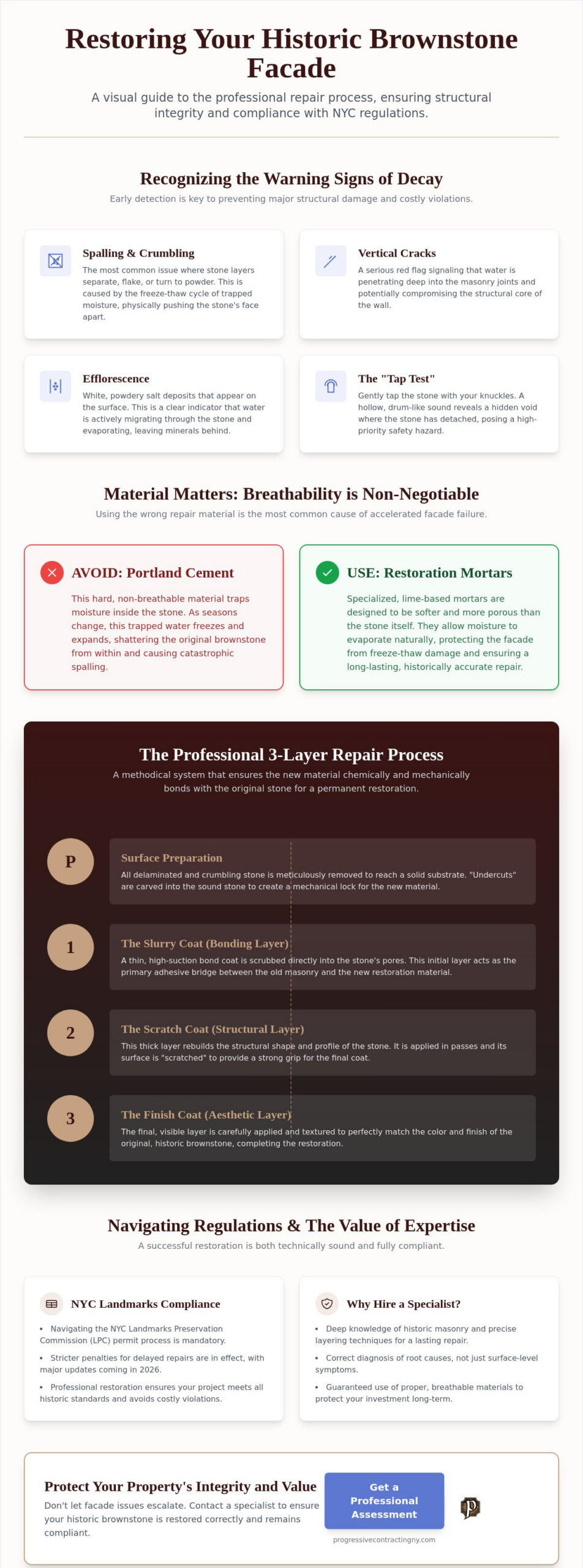
The most common form of decay is spalling, which is the separation of stone layers due to freeze-thaw cycles. This happens when water enters the stone’s pores and expands as it turns to ice, physically pushing the stone’s face away from its core. If left unaddressed, this cosmetic surface wear quickly evolves into structural masonry failure.
To better understand this concept, watch this helpful video:
Identifying decay early saves significant costs and prevents NYC landmark violations. Look for these specific signs of trouble:
- Crumbling surfaces: Small flakes or "shale" appearing at the base of your building.
- Vertical cracks: These often signal that water is penetrating deep into the masonry joints.
- Efflorescence: White, powdery salt deposits that indicate active water migration through the stone.
You can perform a simple "Tap Test" to identify hollow spots behind the facade surface. Gently tap the stone with a rubber mallet or your knuckles. A healthy stone produces a solid, sharp thud. A hollow, drum-like sound reveals a pocket where the stone has already detached from the substrate. These areas are high-priority targets for repair before they fall and create safety hazards. To stay ahead of these issues year-round, our NYC brownstone exterior repair and maintenance checklist provides a practical framework for identifying facade damage before it escalates into a costly emergency.
Common Causes of Facade Deterioration
Most damage stems from water infiltration from failing cornices or cracked window lintels. Spalling is the mechanical failure of sandstone layers caused by trapped moisture. Improper previous repairs using non-breathable Portland cement also cause rapid decay. This hard material seals the stone; it prevents natural evaporation and forces moisture to build up behind the patch until the original brownstone eventually shatters. For a deeper understanding of how these issues compound over time, our guide to historic brownstone renovation brooklyn explains how early warning signs like hairline cracks can escalate into structural decay and NYC DOT sidewalk violations.
The Professional 3-Layer Repair Process
Restoring a historic exterior requires more than just filling cracks with mortar. It’s a technical, sequential system designed to mimic the natural properties of the original stone. When learning how to repair brownstone facade damage, you must understand that a durable bond depends on a specific three-layer application. This method ensures the new material integrates with the building’s structural core rather than sitting precariously on the surface. Following this methodical workflow is the only way to ensure a lasting result when considering how to repair brownstone facade damage on a historic property.
Surface Preparation and Cutting
Preparation begins by removing all delaminated or crumbling stone until the mason reaches a healthy, solid substrate. We don’t stop at a flat surface; instead, we carve "undercuts" or jagged patterns into the sound stone. These grooves create a mechanical lock that physically holds the new mortar in place. After cutting, we clean the area meticulously to remove all dust and debris. We follow National Park Service guidelines during this phase to ensure the surface is chemically and physically ready for bonding.
Once the surface is prepared, the restoration moves through three distinct phases:
- Step 1: The Slurry Coat. This is a thin, high-suction bond coat scrubbed directly into the stone’s pores. It creates the primary adhesive bridge between the old masonry and the new restoration material.
- Step 2: The Scratch Coat. This layer rebuilds the structural shape and architectural profile. Masons apply it in thick passes and "scratch" the surface to provide a grip for the final aesthetic layer.
- Step 3: The Finish Coat. This is the final aesthetic layer. We custom-mix the pigments and aggregates to match the specific color and texture of your building’s original stone.
Architectural Detailing (Lintels and Sills)
The scratch coat is where skilled masons recreate the ornate floral or geometric details that define NYC’s historic districts. Precision is vital here, especially when carving "drips" on the underside of window sills. These small grooves force rainwater to fall directly to the ground, which prevents moisture from running down and eroding the stone below. Reaching out for expert brownstone repair is often the best way to ensure these intricate details are restored with historical accuracy. A specialized brownstone contractor can help you maintain these features while ensuring your building remains watertight.
Navigating NYC Regulations and Material Selection
Successfully managing how to repair brownstone facade projects in New York requires more than technical skill; it demands a deep understanding of municipal law and material science. If your property is located within a historic district, the Landmarks Preservation Commission (LPC) oversees every aesthetic choice. Failure to follow their specific guidelines can result in stop-work orders and heavy fines. We prioritize transparency in this process, ensuring all materials and methods meet the highest standards of local compliance.
The choice of mortar is where many projects fail. Standard "contractor grade" Portland cement is far too hard for historic sandstone. It creates a rigid shell that traps moisture, leading to the internal rot and spalling discussed earlier. Instead, we use custom-mixed brownstone mortar. This mixture includes crushed stone and specific mineral pigments to achieve a perfect match. A true professional performs color matching while the mortar is wet and again after it has fully cured, as the shade shifts significantly during the drying process.
LPC Compliance for Historic Districts
Most exterior work requires a permit, but major structural or aesthetic changes often necessitate a "Certificate of Appropriateness." This document proves your restoration respects the historical fabric of the neighborhood. You can find detailed steps on managing these requirements in our guide to brownstone facade renovation brooklyn. Staying within these legal boundaries protects your property value and prevents administrative headaches.
Mortar Breathability and Longevity
Vapor permeability is the most critical factor for long-term durability. The new facade must "breathe" to allow seasonal moisture to escape. Modern waterproof sealants are often marketed as protection, but they actually accelerate decay by sealing water inside the stone. We avoid these shortcuts, focusing instead on traditional, breathable masonry techniques that allow for natural evaporation. If you’re ready to protect your home’s exterior, contact us for a professional facade restoration today.
Hiring a Specialist vs. DIY Facade Repair
A professional restoration provides a permanent bond that a temporary patch cannot achieve. When interviewing a masonry contractor, ask specific questions about their layering technique. A disciplined expert will describe the three-layer process in detail and explain how they ensure vapor permeability. Additionally, verify that the contractor carries comprehensive insurance for NYC scaffolding work. Safety and liability are paramount in the city’s dense residential blocks, and you must ensure your property is protected during the construction phase.
Vetting a Brooklyn Masonry Contractor
Experience matters in the specific context of New York architecture. A reputable brownstone specialist should provide local references in neighborhoods like Park Slope or Bed-Stuy. Ask to see examples of their Rammstein stoop restoration and historic brick pointing. These projects require a high level of precision and an understanding of how historic materials behave over decades of exposure to the city’s environment. To learn more about what separates a qualified specialist from a general contractor, our expert guide to historic brownstone renovation in Brooklyn outlines the technical qualifications and LPC compliance knowledge you should expect from any professional you hire.
Long-Term Maintenance Strategy
Restoration is an investment that requires proactive protection. Proper cleaning is essential; never use high-pressure power washing on historic masonry. The intense force can destroy the stone’s surface and trigger immediate decay. Instead, use gentle, low-pressure methods recommended for sedimentary rock. We suggest scheduling a professional inspection every 3 to 5 years to catch minor hairline cracks early. This routine maintenance prevents water infiltration and ensures your facade remains structurally sound for the next generation. For a comprehensive approach to ongoing upkeep, our brownstone exterior repair NYC maintenance checklist outlines the key seasonal tasks and inspection points that help homeowners stay ahead of costly damage.
Protecting Your Historic Investment for the Future
Restoring a historic exterior is a significant responsibility that balances architectural preservation with modern structural requirements. By identifying early signs of spalling and following a disciplined three-layer restoration process, you protect your building from the compounding damage caused by New York’s harsh freeze-thaw cycles. Understanding how to repair brownstone facade damage correctly is the only way to maintain your property’s value and historic charm while avoiding costly city violations.
We specialize in historic Brooklyn and Manhattan masonry with deep expertise in NYC Landmark compliance and material science. Our team brings decades of experience to every project, from intricate Rammstein stoop restoration to comprehensive building facade restoration. If you are concerned about the current condition of your masonry, you should request a professional facade assessment from Progressive Contracting to secure your home’s structural integrity. Taking proactive steps today ensures your brownstone remains a stable and beautiful part of the community for the next generation.
Frequently Asked Questions
How much does it cost to repair a brownstone facade in NYC?
Total project costs depend on several specific variables, including the building’s height, the complexity of the architectural ornaments, and the depth of the underlying stone decay. A full resurfacing for a multi-story building requires different resources than a targeted repair of a single parlor floor. We recommend a professional site assessment to evaluate the structural condition and provide a detailed scope of work tailored to your property’s needs.
How long does a typical brownstone facade restoration take?
A comprehensive restoration project usually takes between three and six weeks to complete. This timeline allows our masons to follow the necessary sequential steps for cleaning, cutting, and applying the three-layer mortar system. We also account for specific curing times between the scratch and finish coats, which are essential for ensuring the new material bonds permanently with the original stone substrate.
Can I use regular cement to patch my brownstone?
You shouldn’t use standard Portland cement for any historic masonry repair. Regular cement is significantly harder and less porous than natural sandstone, which creates a moisture trap behind the patch. When you are researching how to repair brownstone facade damage, it’s vital to choose custom-mixed, breathable mortars. These specialized materials allow water vapor to escape, preventing the internal rot that leads to future spalling.
Do I need a permit for minor brownstone repair in Brooklyn?
Yes, most exterior masonry work in Brooklyn requires a permit from the NYC Department of Buildings. If your home is located within a historic district, you must also obtain approval from the Landmarks Preservation Commission (LPC). Navigating these requirements is a standard part of how to repair brownstone facade projects. We handle the technical details of compliance to ensure your restoration meets all local legal and aesthetic standards.
What is the best time of year to repair a brownstone facade?
The ideal window for masonry restoration is from late spring through early autumn. Masons need consistent temperatures above 40 degrees Fahrenheit to ensure the mortar cures correctly without freezing or cracking. While some minor work can happen in colder months with specialized heating enclosures, the most durable results occur when the weather is stable and temperate.