
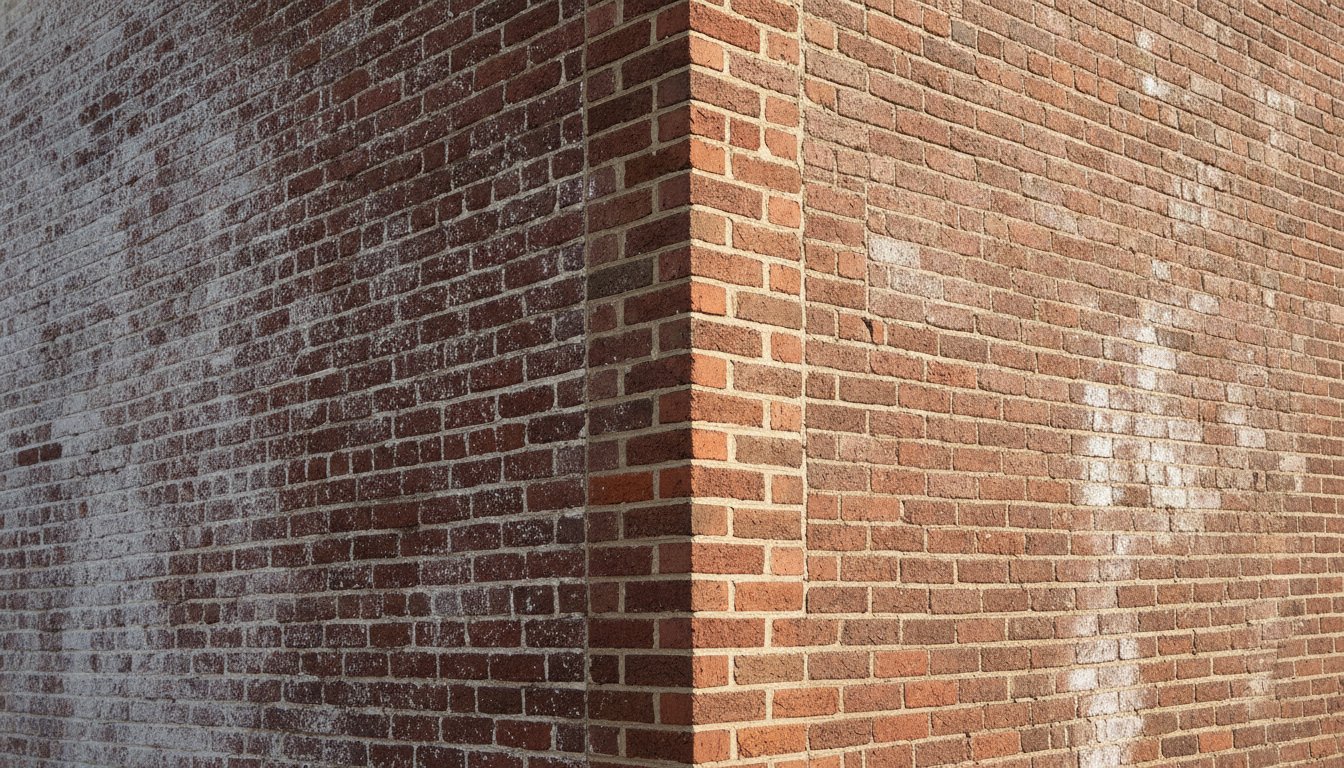
That stubborn white powder on your exterior walls isn’t just a surface stain; it’s a warning that moisture is moving through your masonry and threatening its structural integrity. You’ve likely tried scrubbing it away only to see the ghostly haze return after the next rain. It’s frustrating to watch your home’s curb appeal fade while you receive conflicting advice about whether to power wash the brick or seal it immediately. When it comes to preventing efflorescence on brick brooklyn homeowners often struggle to find a permanent solution that goes beyond a quick fix.
We understand that maintaining a historic property in New York requires precision and a clear understanding of traditional materials. This guide provides the exact steps you need to stop these salt deposits for good and protect your property from hidden water damage. We will break down the link between moisture and mineral salts, outline a professional plan for remediation, and help you identify a reliable local contractor who understands the unique needs of NYC’s historic facades. By the end of this article, you’ll have a clear path toward restoring your home’s appearance and ensuring its long-term durability.
Article Highlights
- Understand the “NYC Factor” and how Brooklyn’s coastal humidity accelerates the migration of soluble salts through porous masonry.
- Learn the critical role of moisture management, including gutter maintenance and drainage, in preventing efflorescence on brick brooklyn homes.
- Identify why breathable silane or siloxane water repellents are the professional standard for long-term masonry protection.
- Discover the structural dangers of film-forming sealers that trap moisture and lead to sub-florescence or brick spalling.
- Establish a clear, sequential plan to restore your property’s curb appeal and protect its underlying structural integrity.
Understanding Efflorescence in Brooklyn’s Historic Masonry
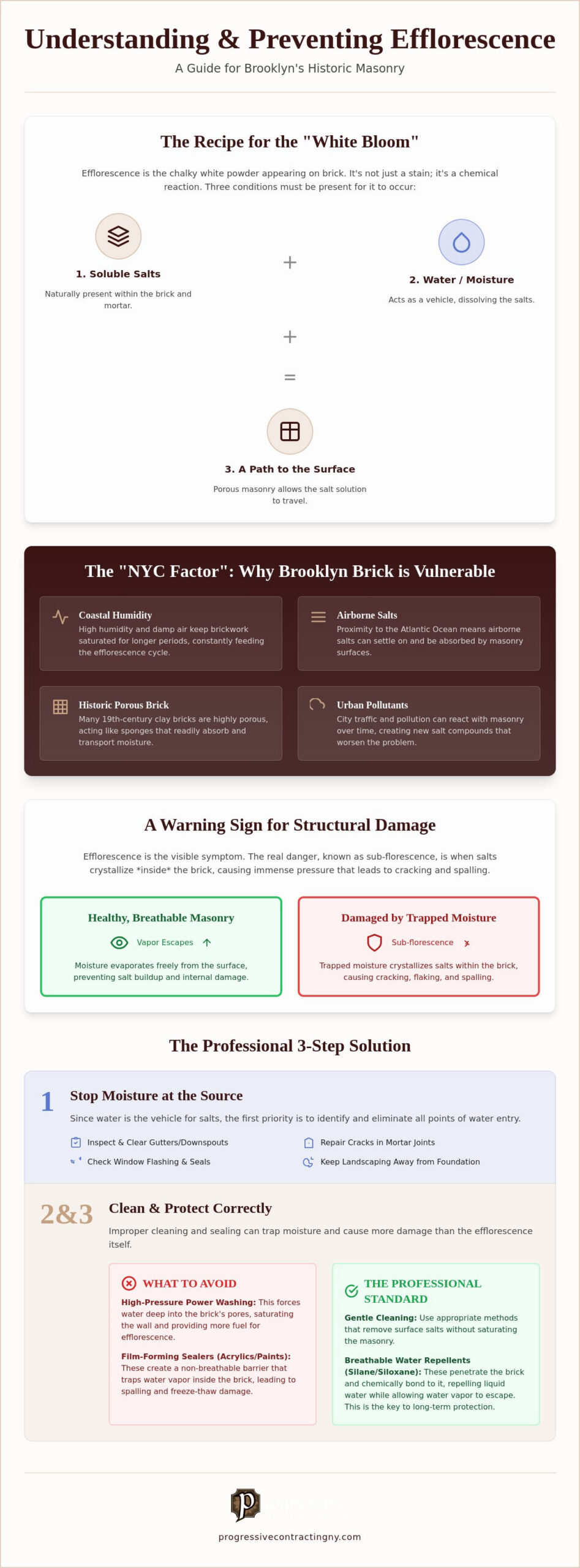
Efflorescence is more than a cosmetic nuisance; it’s a chemical reaction occurring within your home’s walls. This process involves the migration of soluble salts through porous masonry, eventually appearing as a chalky white residue on the exterior. For those focused on preventing efflorescence on brick brooklyn properties require a specialized approach because our local environment accelerates this “bloom” through high humidity and coastal salt air. Understanding Efflorescence starts with recognizing the “NYC Factor.” Our proximity to the Atlantic Ocean introduces airborne salts that can settle on masonry, while the city’s heavy humidity keeps bricks damp for longer periods. This moisture acts as a vehicle, dissolving minerals trapped inside the brick or mortar and pulling them toward the surface.
To better understand this chemical process and how it affects your home, watch this helpful video:
Three specific conditions must exist for this white powder to form. First, there must be soluble salts present in the masonry materials. Second, moisture must be available to dissolve these salts. Finally, the wall must have enough porosity to provide a path for the salt solution to reach the surface. It’s helpful to distinguish between “new building bloom” and chronic issues. New masonry often experiences a temporary bloom as the water used during construction evaporates. However, chronic efflorescence in older Brooklyn homes suggests a persistent moisture problem that requires professional intervention.
The Science of the “White Bloom”
The process relies on capillary action. As liquid water moves through the microscopic pores of a brick, it picks up dissolved minerals. Once the solution reaches the outer face of the wall, the water evaporates into the air, leaving behind solid crystalline salt deposits that bond to the masonry. This recurring cycle is often a primary symptom of brownstone facade deterioration, indicating that the protective layers of your building are beginning to fail.
Why Brooklyn Brickwork is Particularly Vulnerable
Many historic neighborhoods like Park Slope and Bed-Stuy feature 19th-century clay bricks. These materials are incredibly porous compared to modern alternatives. These older bricks absorb moisture like a sponge, making the task of preventing efflorescence on brick brooklyn facades particularly challenging. Additionally, urban pollutants from city traffic can react with the masonry over time, creating new salt compounds that further complicate the restoration process.
Practical Steps for Preventing Efflorescence on Your Property
Moisture control is the most effective strategy for preventing efflorescence on brick brooklyn homes. since water is the primary vehicle for salt migration, you must identify where it enters the wall system. Start at the roofline. Clogged gutters or misaligned downspouts often dump large volumes of water onto the facade, saturating the masonry far beyond its capacity to dry naturally. Maintaining these systems ensures that rain is directed away from the building rather than into the brickwork.
Managing Moisture Infiltration
Inspect your window flashing and look for hairline cracks in the mortar joints. These small openings allow wind-driven rain to penetrate deep into the wall. While modern brick veneers use weep holes to drain internal moisture, the solid masonry construction found in historic Brooklyn buildings relies on the wall’s ability to dry through its surface. Keeping soil and landscaping away from the foundation is also vital. This prevents “rising damp,” where moisture travels upward from the ground through capillary action. For a deeper dive into these mechanics, the Brick Industry Association’s Technical Note on Efflorescence provides extensive data on moisture management.
The Role of Proper Brick Pointing
The integrity of your mortar joints is your primary defense against salt deposits. We often see homeowners make the mistake of using high-pressure power washing to “clean” the brick. This actually forces water deeper into the substrate and damages the brick’s protective skin. Instead, focus on maintaining the joints. Historic Brooklyn facades require lime-based mortars that allow the wall to “breathe.” Using modern Portland cement is a common error. It’s too hard and non-porous, which traps moisture and salts behind the brick face, eventually causing the brick to crumble. Investing in professional brick pointing brooklyn ensures that the new mortar matches the physical properties of the original materials.
If you’ve noticed recurring white stains, a professional masonry contractor can help identify the root cause before structural damage occurs.
Professional Solutions for Long-Term Masonry Protection
For long-term results in preventing efflorescence on brick brooklyn properties require advanced chemical solutions that address the problem at the molecular level. While cleaning the surface provides a temporary visual fix, professionals often utilize neutralizing agents specifically formulated to reach deep-seated salts within the masonry. This treatment stops the cycle of crystallization before the minerals reach the exterior face. Following a thorough, professional cleaning, the application of a high-quality water repellent provides a durable shield against NYC’s driving rain and coastal humidity.
Breathable Sealants vs. Waterproofing
Choosing the right protective layer is a critical decision for any homeowner. We recommend silane or siloxane water repellents because they are penetrating rather than film-forming. Unlike a standard waterproof coating that sits on top of the brick, these repellents enter the pores and bond with the substrate. This allows the wall to breathe, letting internal water vapor escape while blocking liquid water from entering. If you use a non-breathable sealer, you risk trapping moisture behind the surface. This leads to sub-florescence, where salts expand inside the brick and cause brownstone spalling and face-popping.
When to Call a Brooklyn Masonry Expert
If you see bricks beginning to flake or mortar turning into dust, the efflorescence has moved from a cosmetic issue to a structural threat. A professional moisture survey can pinpoint hidden leaks or rising damp that aren’t visible to the naked eye. This data-driven approach ensures that the remediation plan addresses the root cause rather than just the symptoms. Brooklyn’s climate is demanding, and historic facades need a steady hand to maintain their integrity over decades. To protect your home’s value and ensure a salt-free facade, consider Progressive Contracting of NY’s expert masonry services for a detailed evaluation and precision repair. Our team understands the specific challenges of preventing efflorescence on brick brooklyn buildings and provides transparent, reliable solutions tailored to your property’s needs.
Secure Your Home’s Future with Proactive Masonry Care
Effective masonry protection requires a shift from cosmetic fixes to structural management. You now understand that moisture is the primary driver of salt deposits and that maintaining breathable surfaces is the only way to prevent long-term damage. By prioritizing gutter maintenance and using the correct lime-based mortars, you can protect the aesthetic and structural integrity of your property. Managing the environmental factors involved in preventing efflorescence on brick brooklyn properties requires a methodical approach that prioritizes the health of the entire wall system.
Success in restoration depends on experience and a deep respect for traditional building methods. Progressive Contracting of NY brings over a decade of local restoration experience and a thorough understanding of NYC-specific masonry codes to every project. We specialize in historic Brooklyn brownstone and brick restoration, providing the steady hand needed to navigate complex facade challenges. Don’t let recurring salt stains hide deeper water damage. Get a Professional Facade Inspection from Brooklyn’s Masonry Experts to ensure your home remains a stable and beautiful part of the community for years to come. Your property is an investment that deserves precise, expert attention.
Common Questions About Brooklyn Masonry Protection
Is efflorescence on brick dangerous to my health or the building?
Efflorescence consists of natural salt deposits that aren’t toxic to humans. However, the presence of these salts proves that moisture is moving through your masonry. This dampness can eventually lead to mold growth inside your living spaces, which does pose health risks. From a building perspective, the internal pressure caused by salt crystallization can cause the brick face to pop or crumble, leading to serious structural deterioration over time.
Can I use vinegar to remove efflorescence from my Brooklyn home?
You can use a diluted vinegar and water solution to remove light surface stains, but this only addresses the symptom. While the mild acid dissolves the salt, it doesn’t stop the water intrusion that caused the problem in the first place. For long-term success in preventing efflorescence on brick brooklyn homeowners should rely on professional-grade neutralizers. Always rinse the area thoroughly after using vinegar to prevent the acid from lingering in the mortar joints.
How often should I repoint my brick to prevent salt deposits?
Most Brooklyn properties require professional repointing every 20 to 30 years to maintain their structural integrity. If you notice mortar that is sandy, crumbling, or missing, you should address it immediately. High-quality brick pointing is a primary defense for preventing efflorescence on brick brooklyn facades because it seals the small gaps where rainwater enters. Regular inspections help you catch these issues before they turn into expensive restoration projects.
Does efflorescence mean my foundation is failing?
Seeing white powder near the ground doesn’t always indicate a foundation failure, but it does confirm a moisture issue like rising damp. This occurs when the brick absorbs ground water through capillary action. While your foundation may still be stable, the constant presence of water will eventually weaken the masonry and cause the mortar to fail. Improving your property’s drainage and keeping soil away from the brick are essential steps to protect the base of your home.