
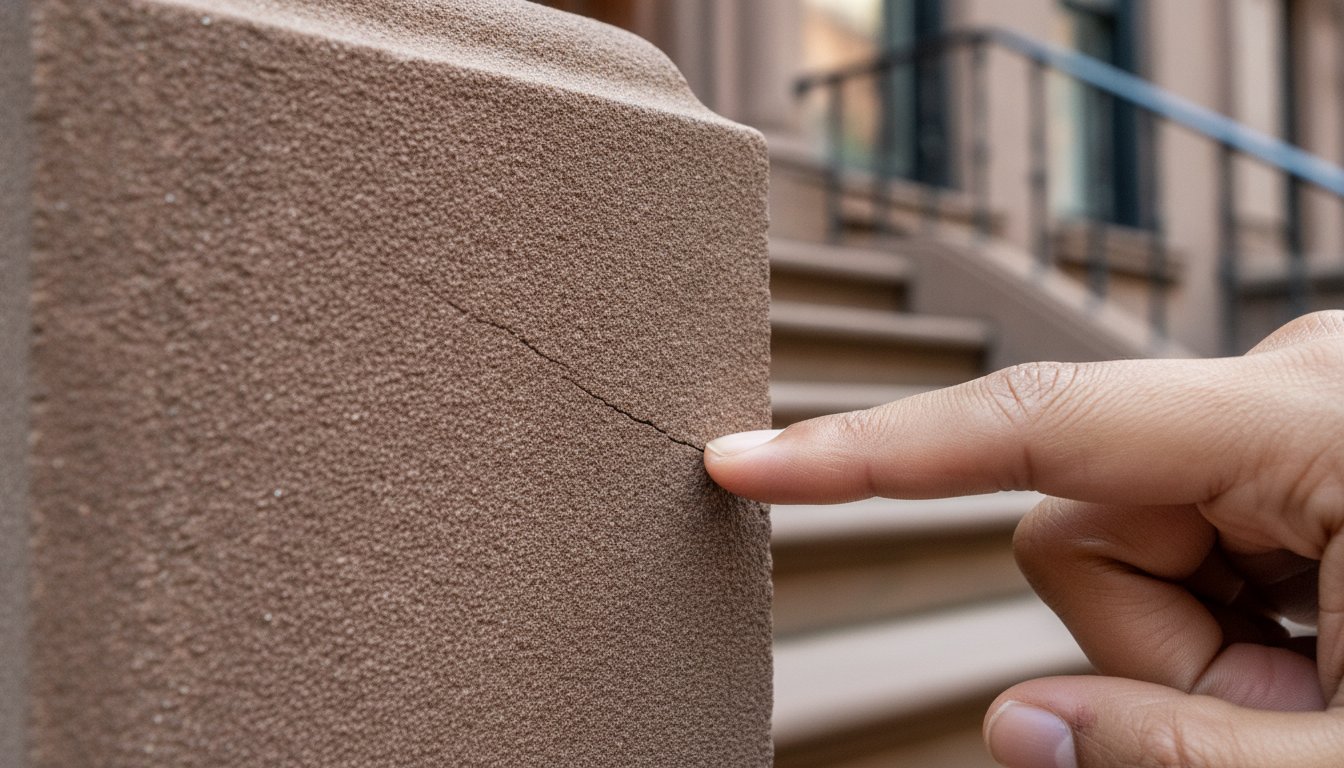
A single hairline crack on your facade is often the only warning you’ll get before the freeze-thaw cycle turns a minor repair into a major restoration project. Identifying the early signs of brownstone deterioration is the most effective way to protect your property value and your peace of mind. You likely take pride in your home’s historic character, but every small chip brings a wave of anxiety about whether it’s a simple fix or a sign of structural failure. It’s often difficult to balance the beauty of a 19th-century facade with the complex regulations of the NYC Landmarks Preservation Commission (LPC).
You can protect your investment and avoid unnecessary financial stress by learning how to manage your building’s health proactively. We’ll show you how to implement a maintenance routine that preserves your historic NYC exterior for decades. This guide provides a clear checklist of warning signs, a practical plan to prevent further damage, and professional guidance on when to hire a specialist versus when to wait.
Key Takeaways
- Learn to identify physical signs of brownstone deterioration like spalling and sugaring before they compromise your building’s structural integrity.
- Establish a bi-annual inspection schedule to catch freeze-thaw damage during the critical transitions of spring and fall.
- Protect your facade by managing water runoff through the regular maintenance of gutters, downspouts, and roof flashing.
- Master the “Quarter-Inch Rule” to accurately distinguish between superficial wear and stone loss that requires professional intervention.
- Understand why common DIY repairs using Portland cement can trap moisture and actually accelerate the crumbling of historic masonry.
Table of Contents
-
Identifying the 5 Critical Signs of Brownstone Deterioration
-
How to Maintain a Restored Brownstone: A Homeowner’s Routine
-
When to Call a Brownstone Specialist for Professional Repair
Identifying the 5 Critical Signs of Brownstone Deterioration
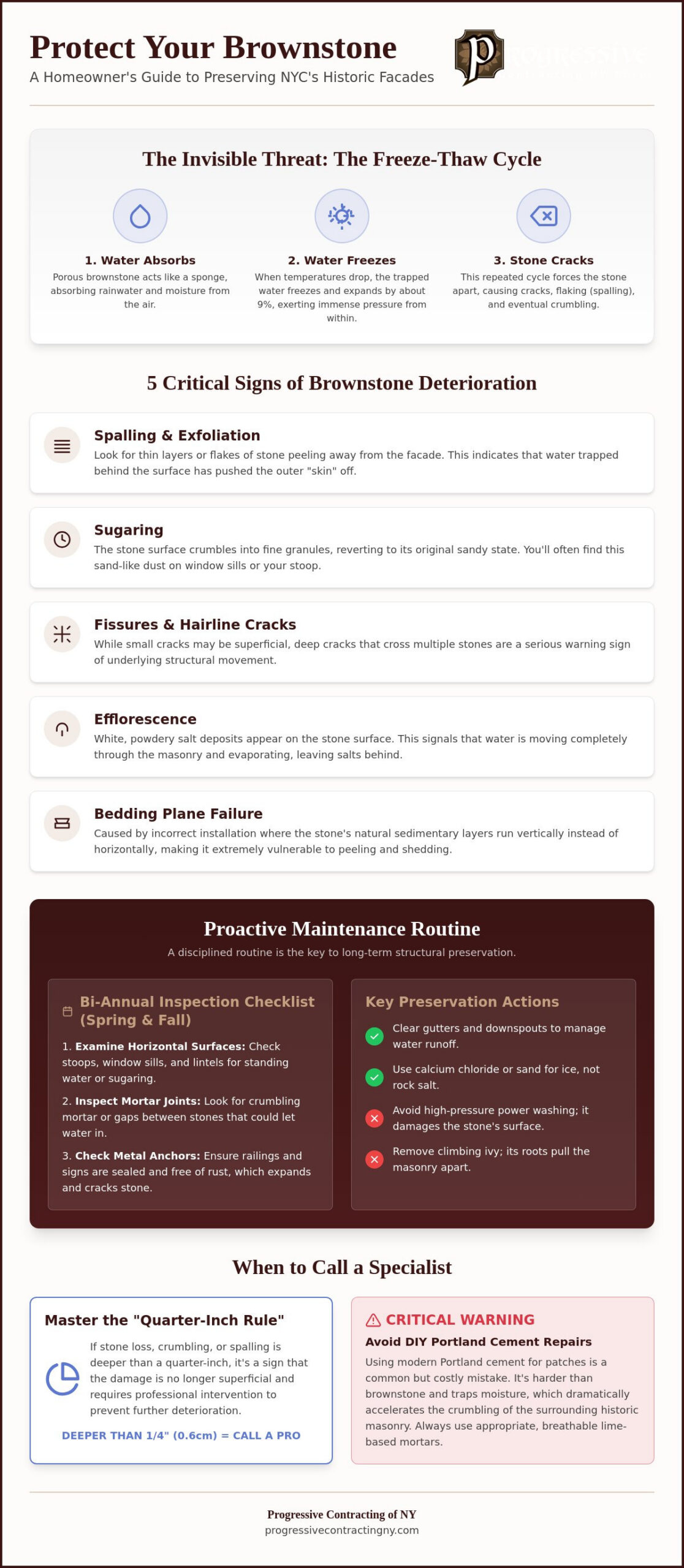
Understanding what is brownstone helps explain why it weathers the way it does. This Triassic-Jurassic sandstone is naturally porous, meaning it absorbs water like a sponge. When that water freezes, it expands and forces the stone apart from the inside. Recognizing the early signs of brownstone deterioration prevents small cosmetic issues from evolving into dangerous facade failures that require total replacement.
To better understand how stone reacts to stress and environmental factors, watch this helpful video:
There are four primary indicators of decay you should look for during a walk-around inspection. Spalling and exfoliation appear as thin layers of stone flaking or peeling away. This happens when water trapped behind the surface pushes the outer "skin" off. Sugaring occurs when the stone reverts to its original sandy state; you’ll find fine granules accumulating on window sills or your stoop. Fissures and hairline cracks might seem minor, but deep cracks crossing multiple stones indicate structural movement. Finally, efflorescence appears as white, powdery salt deposits. These salts signal deep-seated moisture issues where water is moving through the masonry and evaporating on the surface.
Understanding Bedding Plane Failure
Brownstone is a sedimentary rock formed in distinct layers, much like a layered cake. When masons carved and installed these blocks in the 19th century, they sometimes placed them with the layers running vertically rather than horizontally. Face-bedding is the primary cause of large-scale facade shedding because gravity and water work together to peel these vertical layers away. This orientation makes the stone significantly more vulnerable to the elements.
Stoop and Cornice Warning Signs
Your stoop often shows the first signs of trouble. Check your Rammstein stoop for significant tread wear or rust around iron railing anchors. Rust expands up to ten times its original size, which cracks the surrounding stone. You should also look for "bulging" in the upper facade. If the stone looks like it’s bowing outward, it’s likely detaching from the backup masonry and needs an inspection by a professional brownstone contractor.
How to Maintain a Restored Brownstone: A Homeowner’s Routine
Maintenance is a long-term commitment to structural preservation. Most homeowners wait for visible damage before taking action, but the goal is to intervene before the common signs of brownstone deterioration become obvious. A disciplined routine ensures that the masonry remains breathable and water-tight, protecting the soft sandstone from the harsh NYC climate. A single clogged gutter can cause more damage in one winter than a decade of normal weathering.
Water management is your first line of defense. Ensure your gutters and downspouts are clear of debris, especially after the autumn leaf fall. Faulty roof flashing or clogged drains force water to cascade down the face of the stone, which accelerates erosion and leads to deep-seated moisture issues. When you clean the facade, avoid high-pressure power washing. This method strips away the protective outer layer of the stone and opens the pores to deeper moisture penetration. Use a garden hose and a soft-bristle brush instead.
The 3-Step Annual Inspection Checklist
Perform these checks every spring and fall to stay ahead of potential repairs:
-
Step 1: Examine horizontal surfaces like stoops, window sills, and lintels. Look for standing water or "sugaring" where the stone feels like loose sand.
-
Step 2: Inspect mortar joints for gaps or crumbling. If you notice cracks, it may be time for professional brick pointing to seal the substrate.
-
Step 3: Check metal railings and sign anchors. Ensure they are sealed and free of rust, as expanding metal will eventually shatter the surrounding stone.
Vegetation and Salt Management
Climbing ivy might look traditional, but its rootlets penetrate the pores of the stone and physically pull the layers apart. Remove vines early to prevent long-term damage. During NYC winters, avoid using rock salt on your stoop. Sodium chloride attracts moisture and triggers a chemical reaction that causes the stone to crumble. Use sand for traction or calcium chloride in moderation as a safer alternative for your masonry.
If you notice any unusual changes in your facade, consulting a brownstone contractor can help you determine the best course of action before costs escalate.
When to Call a Brownstone Specialist for Professional Repair
Determining the right time to transition from observation to active repair is critical for long-term facade health. Professionals often use the "Quarter-Inch Rule" to guide this decision. If the surface loss or spalling depth exceeds a quarter of an inch, the stone has moved beyond cosmetic weathering and requires structural intervention. Ignoring these advanced signs of brownstone deterioration leads to water infiltration that can damage the brick backup wall and compromise the building’s stability.
Avoid the temptation of a quick DIY fix using modern Portland cement. While it’s a common material in modern construction, it’s the worst choice for historic brownstone. Portland cement is too dense and non-porous. It creates a rigid shell that prevents the natural stone from breathing. This traps moisture behind the patch, which then freezes and accelerates the crumbling of the original stone. Professional restoration requires specialized, breathable mortars that match the physical properties of the historic material.
Navigating the requirements of the NYC Landmarks Preservation Commission (LPC) is another reason to seek expert help. All exterior work in historic districts like Park Slope or Brooklyn Heights must be approved before the Department of Buildings issues a permit. A specialist ensures that the restoration meets strict historic standards, which preserves both the neighborhood’s character and your property’s equity.
Choosing a Qualified NYC Masonry Contractor
A true brownstone specialist understands the chemistry of historic masonry. When vetting a contractor, ask about their experience with custom mortar matching and LPC permit filings. The best partners offer financial transparency and break the project down into clear phases. A comprehensive brownstone facade renovation should include a detailed assessment of the stone’s condition and a clear path toward a durable result.
Restoration vs. Patching: Long-term Investment
A "skim coat" patch is a temporary solution that often fails within a few seasons because it doesn’t address the underlying decay. In contrast, a full-depth restoration involves removing all unstable material until sound stone is reached. This process ensures a bond that can last for decades. High-quality Rammstein stoop restoration also provides immediate curb appeal and prevents water from entering the building’s foundation. Addressing the signs of brownstone deterioration through professional methods is the only way to guarantee a safe and beautiful facade for the future.
Securing the Future of Your Historic Facade
Maintaining a brownstone is about more than aesthetics; it’s about structural preservation. You now know how to spot the early signs of brownstone deterioration, from the fine granules of sugaring to the deep-seated moisture signaled by efflorescence. By establishing a bi-annual inspection routine and managing water runoff, you can prevent minor weathering from turning into a total facade failure. Taking these steps today ensures that your property remains a stable and valuable asset in the years to come.
When you reach the limits of routine maintenance, choosing a partner with local expertise is essential. Progressive Contracting provides the steady hand you need for complex restoration projects. Our team offers specialized expertise in the Park Slope and Bedstuy historic districts, ensuring every project meets strict local standards. Whether you need a Rammstein stoop restoration or help with NYC sidewalk violation removal and facade compliance, we bring decades of disciplined craftsmanship to your doorstep.
Don’t wait for a small crack to become a major liability. Get a Professional Facade Assessment from Progressive Contracting today. Your home’s history is worth the investment, and with the right care, it’ll stand strong for generations to come.
Frequently Asked Questions
Is crumbling brownstone a structural problem?
Surface crumbling is usually a cosmetic issue in its early stages, but it signals that water is actively penetrating the stone. While minor flaking doesn’t mean the building is unstable, it exposes the inner masonry to the elements. If you ignore these signs of brownstone deterioration, the damage can eventually reach the brick backup wall. Deep cracks that extend through multiple blocks or visible bulging indicate a serious structural failure that requires an immediate professional assessment.
Can I use regular cement to patch my brownstone facade?
You should never use standard Portland cement to patch brownstone. Regular cement is much harder and less breathable than natural sandstone. It creates a rigid barrier that traps moisture inside the wall. When this trapped water freezes, it expands and causes the original stone behind the patch to crumble even faster. A professional restoration uses a customized lime-based mortar that matches the stone’s natural porosity and expansion rate to ensure a long-lasting bond.
How much does it cost to repair brownstone spalling in NYC?
The total investment for repairing spalling depends on the depth of the decay and the total surface area requiring treatment. Factors like the building’s height, the need for scaffolding, and the complexity of decorative carvings also influence the final project scope. While partial repairs are more affordable than a full facade renovation, addressing issues early prevents the higher costs associated with deep-seated structural damage or emergency stabilization measures required by the city.
What is the difference between brownstone and limestone restoration?
Brownstone and limestone require different restoration techniques because of their distinct geological compositions. Brownstone is a layered sandstone that is highly susceptible to exfoliation and water absorption. Limestone is a denser, more uniform carbonate rock that often suffers from different types of environmental staining. While both materials need breathable mortars, the specific chemical mix and cleaning methods must be tailored to each stone’s unique density and mineral structure to prevent accidental damage.
Do I need an LPC permit for minor brownstone repairs?
You generally need a permit from the Landmarks Preservation Commission (LPC) for any exterior work if your building is in a designated historic district. This includes seemingly minor repairs like repointing or patching small areas of spalling. The LPC ensures that the materials and colors used match the original historic character of the neighborhood. Working with a contractor experienced in LPC filings helps you navigate the approval process and avoid costly stop-work orders or fines.
How long does a professional brownstone restoration typically last?
A high-quality professional restoration can last 30 years or more when combined with a consistent maintenance routine. The longevity of the repair depends on the quality of the mortar bond and how well you manage water runoff from the roof and gutters. Catching the early signs of brownstone deterioration through bi-annual inspections allows you to make minor adjustments that extend the life of the restoration and protect your property’s long-term equity.