
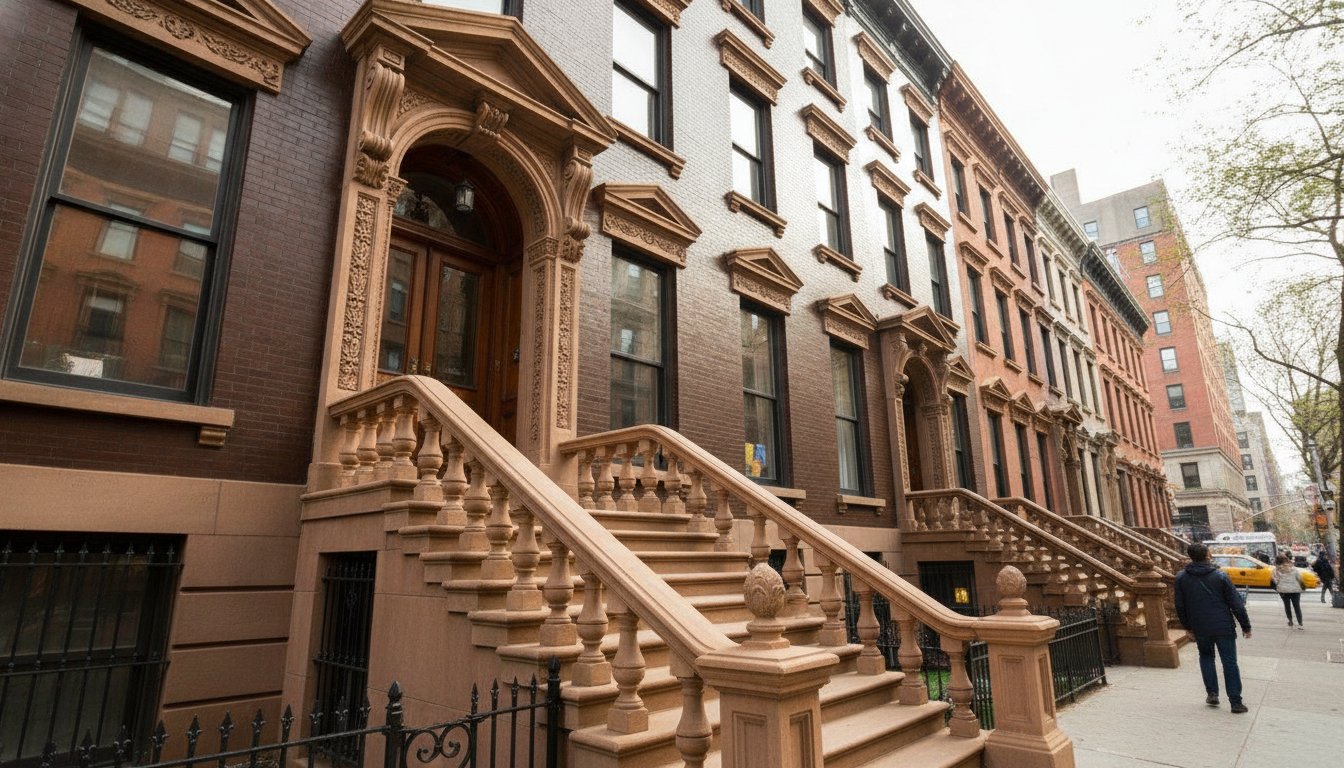
A deteriorating exterior on a historic New York building isn’t just a maintenance headache; it’s a financial liability that actively erodes your investment. While many owners view masonry work as a burdensome cost forced by the city, the right approach can actually increase property value with facade restoration nyc. You’re likely concerned about the rising costs of specialized labor or the looming threat of FISP Cycle 10 penalties. It’s a common stress point for owners who want to protect their assets while avoiding the heavy fines associated with the latest filing windows that opened in February 2025.
Get quote (718)-350-7388, (347)-341-3808
We understand that navigating NYC Department of Buildings regulations often feels like a defensive game. This article will show you how to shift your strategy from simple compliance to equity growth. You’ll discover how proactive facade restoration preserves structural integrity, ensures you meet the latest parapet inspection deadlines, and ultimately positions your property as a premium asset in a crowded market. We’ll outline the methodical steps to turning necessary repairs into a lasting investment in your building’s future.
Key Takeaways
- Learn how the “Curb Appeal Multiplier” in neighborhoods like Park Slope and Manhattan directly justifies higher rental rates and resale prices.
- Discover the specific strategies used to increase property value with facade restoration nyc while transforming regulatory burdens into market advantages.
- Understand how maintaining FISP and Local Law 11 compliance protects your building’s equity and prevents the DOB violations that stall property sales.
- Identify why targeted masonry services like brick pointing and Rammstein stoop restoration provide the highest return on investment for historic exteriors.
Table of Contents
-
The Financial Impact of Facade Restoration on NYC Real Estate
-
Protecting Equity Through Compliance and Structural Integrity
The Financial Impact of Facade Restoration on NYC Real Estate
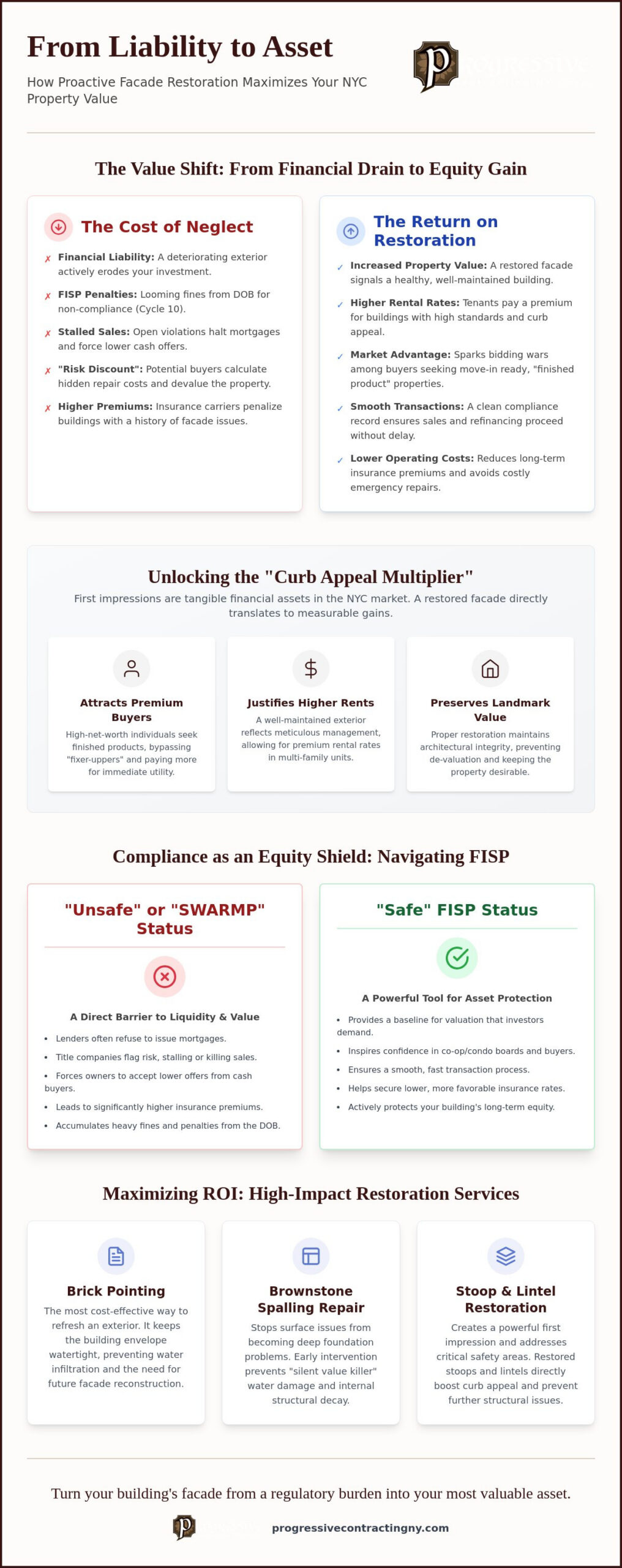
In the competitive NYC real estate market, first impressions are tangible financial assets. A building’s exterior acts as a "Curb Appeal Multiplier," particularly in historic corridors like Park Slope or Manhattan. When a property presents a crumbling facade, potential buyers immediately calculate the hidden costs of structural repair. Conversely, a restored exterior signals that the owner has prioritized the building’s health. This proactive stance helps property owners increase property value with facade restoration nyc by removing the "risk discount" that buyers apply to neglected masonry. For multi-family units, this translates to higher rental rates. Tenants are willing to pay a premium for a building that reflects a high standard of living and meticulous management.
Aesthetics as an Asset Class
Investing in a professional brownstone facade renovation transforms a building from a project into a finished product. High-net-worth buyers often bypass properties with visible spalling or cracked lintels because they want immediate utility. While "fixer-upper" exteriors may languish on the market for months, fully restored historic facades often spark bidding wars. This isn’t just about beauty; it’s about the financial reality of NYC construction. Buyers know that specialized masonry work is expensive and time-consuming. When the work is already done to a high standard, they’re happy to pay the difference upfront.
Landmark Status and Value Retention
Maintaining the architectural integrity of a historic block is essential for long-term equity. Owners who value their building’s heritage might look into understanding facadism to see how the industry balances preservation with modern needs. In NYC, architectural integrity and resale premiums are inseparable. If a building loses its original character through cheap, non-compliant repairs, it loses its place in the luxury market. Proper restoration prevents the "de-valuation" of the property and ensures it remains a desirable piece of New York history for decades.
Protecting Equity Through Compliance and Structural Integrity
NYC Department of Buildings (DOB) violations are more than just legal paperwork. They’re active barriers to liquidity. When a property has open facade violations, lenders often refuse to issue mortgages, and title companies flag the risk immediately. This stalls sales and forces owners to accept lower offers from discounted cash buyers. By clearing these hurdles, you protect your building’s equity and ensure a smooth transaction. Maintaining a "Safe" status through the Facade Inspection & Safety Program (FISP) provides a baseline for valuation that sophisticated investors demand. By addressing these issues, you don’t just avoid fines; you actively increase property value with facade restoration nyc by presenting a building that is structurally sound and legally compliant.
Navigating Local Law 11 and FISP
A "Safe" filing status is a powerful tool during co-op or condo board reviews. It proves the building is managed with foresight. Beyond buyer confidence, insurance carriers are increasingly scrutinizing facade safety reports. Buildings with a history of "Unsafe" or "SWARMP" (Safe With a Repair and Maintenance Program) status often face higher premiums. Proactive work helps you increase property value with facade restoration nyc by lowering long-term operating costs and making the building more attractive to risk-averse boards.
Stopping Spalling and Water Damage
Water infiltration is a silent value killer. It seeps behind the stone and causes internal structural decay that isn’t always visible from the sidewalk. Addressing brownstone spalling repair early prevents these surface issues from becoming foundation problems. The process of brownstone repair involves removing loose material and applying breathable patches that mimic the original stone. Early intervention in brick pointing is equally vital. It keeps the building envelope watertight and prevents the need for a total facade reconstruction later. If you’re seeing signs of wear, consulting an expert brownstone restoration specialist can help you map out a cost-effective path forward.
Maximizing ROI: Choosing High-Impact Restoration Services
Strategic choices determine the actual return on your investment. While a full overhaul is sometimes necessary, specific high-impact services often yield the best financial results. Expert brick pointing stands out as the most cost-effective way to refresh an exterior without the price tag of a total rebuild. It restores the building’s aesthetic while sealing the envelope against moisture. To truly elevate a property’s market position, a Rammstein stoop restoration creates a grand entrance that sets a tone for the entire interior. This specific upgrade often serves as the focal point for real estate photography, capturing buyer interest before they even step through the door.
Beyond aesthetics, practical repairs like sidewalk violation removal are essential for liquidity. A clear title is a prerequisite for any sale. By resolving these issues alongside facade work, you ensure the property is ready for a quick transaction. You can significantly increase property value with facade restoration nyc by bundling these safety improvements with cosmetic upgrades.
High-Impact Masonry and Pointing
Knowing when to choose repointing over full stone replacement is key to managing your budget. If the underlying stone is sound but the joints are recessed or sandy, repointing is the logical path. For those curious about what is a brownstone and why it requires specific care, the answer lies in its soft, porous nature. Matching mortar color and composition is non-negotiable. Using modern, hard cement on historic stone causes the stone to crack, which destroys the very value you’re trying to build.
Vetting Your NYC Restoration Partner
A general contractor may not understand the nuances of historic preservation. When reviewing portfolios in Brooklyn and Manhattan, look for specialized experience in brownstone and masonry. A reliable partner provides transparent pricing and logical timelines from the start. Use this checklist to evaluate potential contractors:
-
Local Portfolio: Does the contractor have documented work in your specific neighborhood?
-
Material Expertise: Can they explain the difference between breathable lime-based mortars and standard Portland cement?
-
Filing Knowledge: Are they familiar with current DOB and Landmarks Preservation Commission (LPC) requirements?
This clarity prevents budget creep and ensures the project finishes on schedule, allowing you to increase property value with facade restoration nyc while maintaining a predictable ROI.
Secure Your Building’s Legacy and Financial Future
Restoring a historic facade is more than a regulatory chore; it’s a strategic investment in your property’s longevity. We’ve explored how maintaining architectural integrity and meeting FISP deadlines protects your equity from the risk discount applied to neglected buildings. By choosing high-impact services like Rammstein stoop restoration or precision brick pointing, you transform a crumbling exterior into a premium market asset. These methodical steps allow you to increase property value with facade restoration nyc while ensuring your building remains a landmark of quality in its neighborhood.
Progressive Contracting NY Corp brings deep expertise to the historic districts of Brooklyn and Manhattan. We specialize in brownstone restoration and have a proven track record of NYC sidewalk violation removal. Our team offers the steady hand and transparent communication needed to navigate complex city regulations without the stress of unforeseen delays. We focus on high-level craftsmanship that respects traditional methods while providing financial transparency throughout the project’s lifecycle.
Ready to protect your building’s equity? Get a Professional Facade Restoration Estimate from Progressive Contracting NY Corp today. Let’s ensure your property stands as a testament to durability for years to come.
Frequently Asked Questions
How much does facade restoration typically increase property value in NYC?
Facade restoration can significantly boost market value by enhancing curb appeal and ensuring structural safety. While exact figures depend on the building’s condition, industry data suggests that exterior improvements like stone veneer often return over 100% of their cost in added resale value. It removes the "repair discount" buyers often negotiate for when they see visible masonry decay or crumbling stone.
Can I sell my NYC property if I have a pending sidewalk violation?
You can technically sell a property with a pending sidewalk violation, but it often complicates the closing process. Most lenders and title companies require these violations to be cleared or for funds to be held in escrow to cover the repair costs. Resolving these issues before listing ensures a cleaner title and prevents last-minute delays that could jeopardize the sale or result in lower offers.
What is the difference between facade repair and full restoration?
Facade repair typically addresses localized issues like minor cracks or loose bricks to maintain immediate safety. Full restoration is a comprehensive process that returns the entire exterior to its original historic state. This involves matching the specific masonry composition and architectural details of the building’s era. Choosing the right scope is essential to increase property value with facade restoration nyc while managing your building’s long-term equity.
How often should a NYC brownstone undergo facade maintenance?
Most historic brownstones benefit from a professional inspection every five years to catch minor spalling or mortar erosion. While Local Law 11 requires inspections for buildings over six stories, smaller properties still face the environmental stresses of NYC weather. Regular maintenance like brick pointing or lintel repair prevents minor water infiltration from evolving into a major structural failure that requires a costly and total overhaul.