
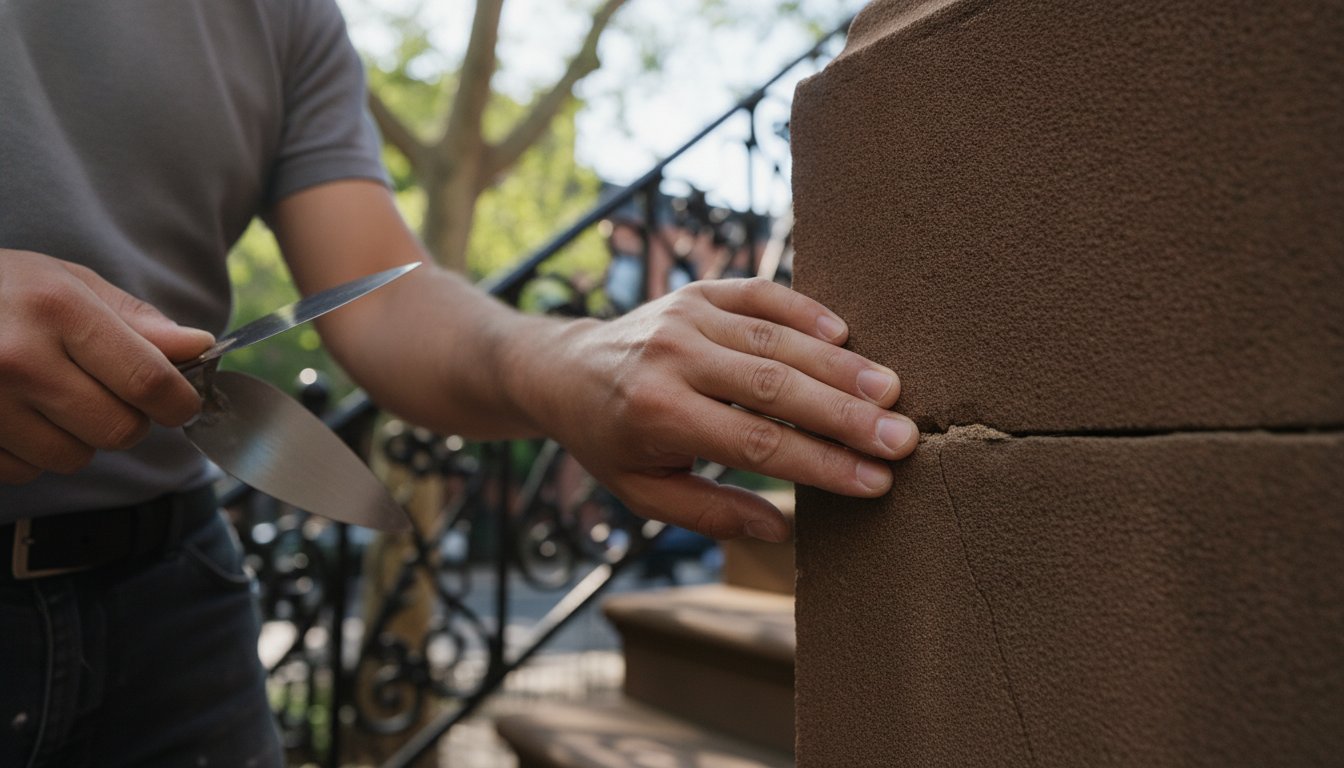
A single winter of NYC freeze-thaw cycles between January and March can do more damage to your brownstone facade than a decade of ordinary wear. When you notice visible spalling or crumbling masonry, it’s often a sign that water has already penetrated the stone’s surface. Ignoring these small signs leads to the high cost of brownstone facade restoration nyc homeowners often face when repairs become structural emergencies. It’s stressful to deal with unexpected DOT sidewalk violations or the sight of your historic property losing its luster, but these issues are manageable with a proactive strategy.
You’ve worked hard to own a piece of New York history, and you want to ensure it remains a stable, high-value asset. This guide provides a professional-grade maintenance plan designed to catch minor issues before they require massive intervention. We’ll walk through a clear seasonal checklist that covers everything from expert brick pointing to stoop care, giving you total peace of mind regarding your home’s structural integrity and market value.
Seasonal Brownstone Maintenance Schedule for NYC Homeowners
NYC’s climate is the primary enemy of historic masonry. The intense humidity of summer followed by the erratic temperature swings of winter creates a cycle of stress that few materials can withstand. To understand why these buildings require such specific care, it’s helpful to first answer the question: What is a Brownstone? These structures consist of a porous sandstone that easily absorbs moisture. Without a disciplined maintenance schedule, small cracks quickly evolve into structural failures that drive up the cost of brownstone facade restoration nyc.
To better understand the financial scope and physical reality of these projects, watch this helpful video:
The NYC Freeze-Thaw Cycle and Masonry Stress
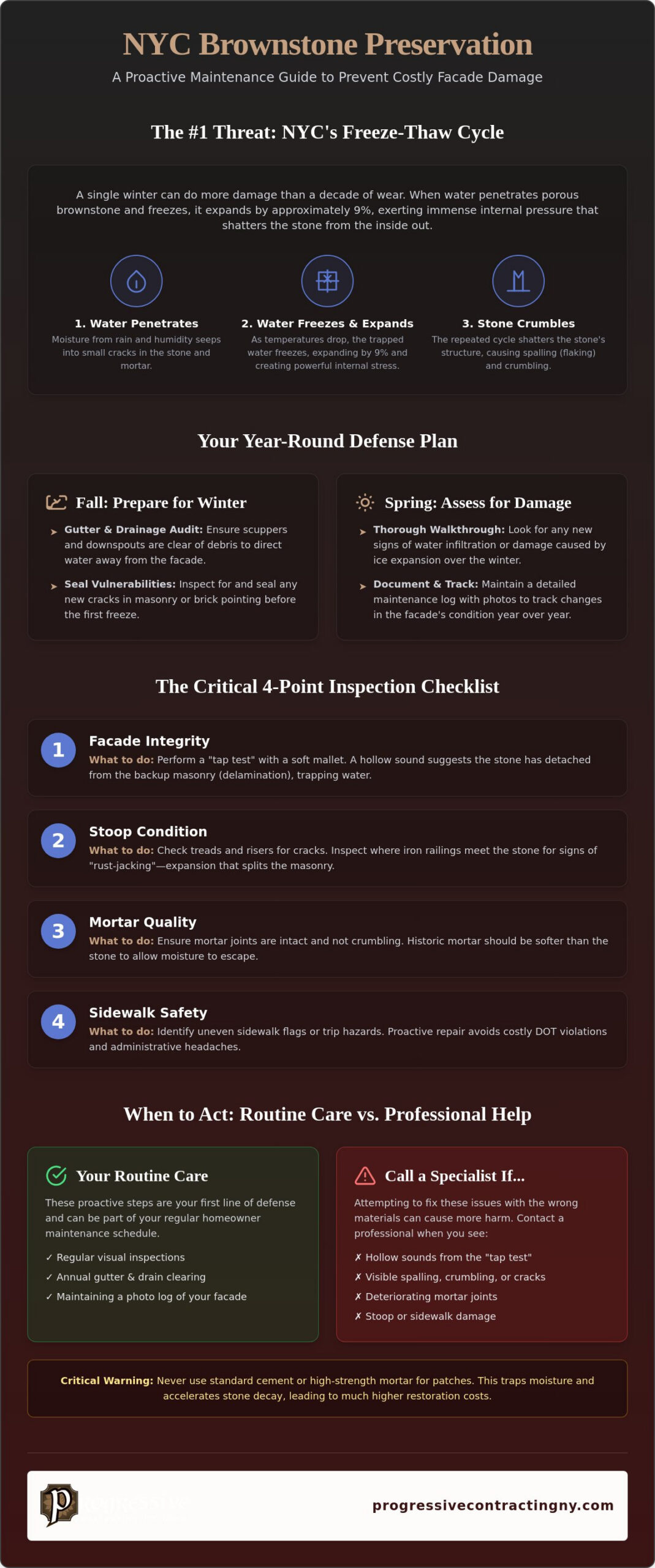
Water is the catalyst for almost all facade deterioration. When liquid enters the porous surface of the stone and the temperature drops, it freezes. This trapped water expands by approximately 9%, exerting immense internal pressure. This process, known as the freeze-thaw cycle, literally shatters the stone’s internal structure from the inside out. You will see this manifested as spalling, where thin layers of the stone face begin to flake off or crumble. In New York, this cycle peaks between January and March, making early detection vital.
Annual Gutter and Drainage Audit
Directing water away from the stone is the most critical step in any brownstone maintenance plan nyc. Every fall, you should inspect scuppers and downspouts for blockages. When drainage systems fail, water concentrates in specific areas of the masonry rather than flowing safely to the ground. This localized saturation leads to rapid decay. Consistent drainage audits prevent the need for emergency repairs and help manage the long-term cost of brownstone facade restoration nyc by preserving the stone’s integrity.
Seasonal Inspection and Documentation
A proactive homeowner maintains a detailed maintenance log to track facade changes over multiple years. In the spring, conduct a thorough walkthrough to identify new water infiltration or ice-expansion damage. In the fall, focus on preparation by sealing any vulnerabilities in the masonry or brick pointing before the first freeze begins. This sequential approach ensures you remain a step ahead of the elements and protects your property’s market value.
The Critical 4-Point Facade and Masonry Checklist
Effective property management for historic homes requires a shift from general maintenance to specialized masonry preservation. The exterior stone is the most vulnerable part of your investment, and understanding the hidden costs of owning a brownstone often starts with recognizing that stone decay is progressive. A small crack today can lead to a significant increase in the cost of brownstone facade restoration nyc if moisture reaches the structural brick behind the veneer. Use this 4-point checklist to assess your building’s health:
- Facade Integrity: Testing for hollow spots or drifting stone layers using the tap test.
- Stoop Condition: Checking for cracks in treads, risers, and railing joints.
- Mortar Quality: Ensuring joints are breathable and softer than the stone to allow for natural expansion.
- Sidewalk Safety: Identifying trip hazards before they trigger a city violation.
Identifying Spalling and Mortar Erosion
You must distinguish between cosmetic weathering and structural brownstone facade deterioration. To do this, perform a “tap test.” Use a soft mallet to gently tap across different sections of the facade. A solid, sharp sound indicates the stone is well-bonded. A hollow “thud” suggests delamination, meaning the stone layer has detached from the backup masonry. This creates air pockets where water collects and freezes, accelerating the internal damage discussed in previous sections.
Stoop and Sidewalk Compliance
Your stoop is often the first area to show distress. Inspect the treads and risers for hair-line cracks or rust-jacking, which occurs when iron railings oxidize and expand, splitting the stone. Addressing these early is vital for brownstone stoop restoration brooklyn projects. Additionally, check your sidewalk for uneven flags. Proactive sidewalk repair prevents the administrative headache and high expense of sidewalk violation removal nyc. If you notice these signs, consulting a brownstone specialist can help you prioritize repairs before they become emergencies and manage the long-term cost of brownstone facade restoration nyc.
Implementing Your Plan: Professional Restoration vs. Routine Care
Routine care is your first line of defense, but you must recognize when damage requires professional intervention. Many homeowners attempt DIY patches using standard hardware store cement or high-strength mortar. This is a critical mistake. These materials are much harder than historic sandstone; they trap moisture and cause the surrounding stone to shatter during the next freeze cycle. Professional care ensures that the materials used are compatible with the specific geology of your building, which ultimately controls the long-term cost of brownstone facade restoration nyc.
Budgeting for a 5-year maintenance plan is significantly more cost-effective than reacting to structural emergencies. A documented history of professional care doesn’t just protect the building; it increases resale value in competitive Brooklyn and Manhattan markets. Buyers look for proof that the facade has been maintained by experts rather than patched with temporary fixes. This proactive approach transforms your maintenance from an expense into a strategic investment.
NYC Compliance and Violation Prevention
Staying ahead of NYC Department of Buildings (DOB) and Department of Transportation (DOT) requirements is essential for 2026. City inspectors look for specific signs of neglect, such as severe spalling or sidewalk trip hazards. Regular professional brick pointing nyc is one of the most effective ways to prevent water-related structural fines. By maintaining the integrity of your mortar joints, you stop water from reaching the backup masonry, which keeps your building compliant and safe from costly city-mandated repairs.
Vetting a Historic Masonry Specialist
Your contractor must understand that brownstone isn’t just “brown brick.” It is a sedimentary stone with specific bedding planes that require precise handling. When vetting a brownstone specialist, ask about their material matching process and the specific breathable mortars they use. A qualified expert will prioritize historic preservation techniques that allow the stone to “breathe,” ensuring the work lasts for decades. This level of craftsmanship is what separates a temporary patch from a successful restoration that manages the overall cost of brownstone facade restoration nyc effectively.
Protecting Your Historic Investment for the Future
Maintaining a historic NYC home is a long-term commitment that rewards consistency. By following a seasonal schedule and utilizing the 4-point masonry checklist, you identify vulnerabilities before they escalate into structural emergencies. This proactive strategy is the most effective method to control the overall cost of brownstone facade restoration nyc. It ensures your property remains a safe, compliant, and high-value asset in the demanding Brooklyn and Manhattan real estate markets.
If you notice signs of delamination or need assistance with sidewalk compliance, professional guidance is essential. Progressive Contracting NY Corp specializes in Park Slope and Bed-Stuy historic restorations, with deep expertise in Rammstein stoop masonry and facade repair. We maintain a proven track record of clearing NYC sidewalk violations and restoring structural integrity to historic icons. Request a Professional Facade Assessment from Progressive Contracting NY Corp to secure your home’s legacy today. Your brownstone is a vital piece of New York history; with the right care, it’ll stand for another century.
Frequently Asked Questions
How often should I have my NYC brownstone professionally inspected?
You should schedule a professional masonry inspection every one to three years. Regular checkups allow a specialist to identify hairline cracks or mortar erosion before they escalate into deep-seated water damage. Catching these issues early is the most effective way to manage the long-term cost of brownstone facade restoration nyc and avoid emergency structural repairs that arise from years of neglect.
What is the most common cause of brownstone facade crumbling?
Water infiltration combined with New York’s intense freeze-thaw cycle is the primary cause of facade crumbling. Because brownstone is a porous sandstone, it absorbs moisture that expands when temperatures drop between January and March. This internal pressure shatters the stone’s layers from the inside out, resulting in the visible flaking or spalling often seen on historic Brooklyn and Manhattan row houses.
Can I use a pressure washer to clean my brownstone facade?
You shouldn’t use a standard high-pressure washer on historic brownstone. High-pressure streams often strip away the stone’s natural protective surface and force water deep into the masonry joints, which accelerates decay. Instead, professionals use low-pressure misting or specialized steam cleaning methods that remove carbon crust and pollutants without compromising the stone’s structural integrity or causing surface erosion.
How do I know if my brownstone needs repointing or a full renovation?
Use the tap test to distinguish between surface mortar issues and structural stone failure. If the mortar joints are receding but the stone sounds solid and sharp when tapped, you likely only need professional brick pointing. However, if the stone produces a hollow thud or shows deep delamination where entire layers are drifting, a more comprehensive restoration is necessary to stabilize the building’s exterior.