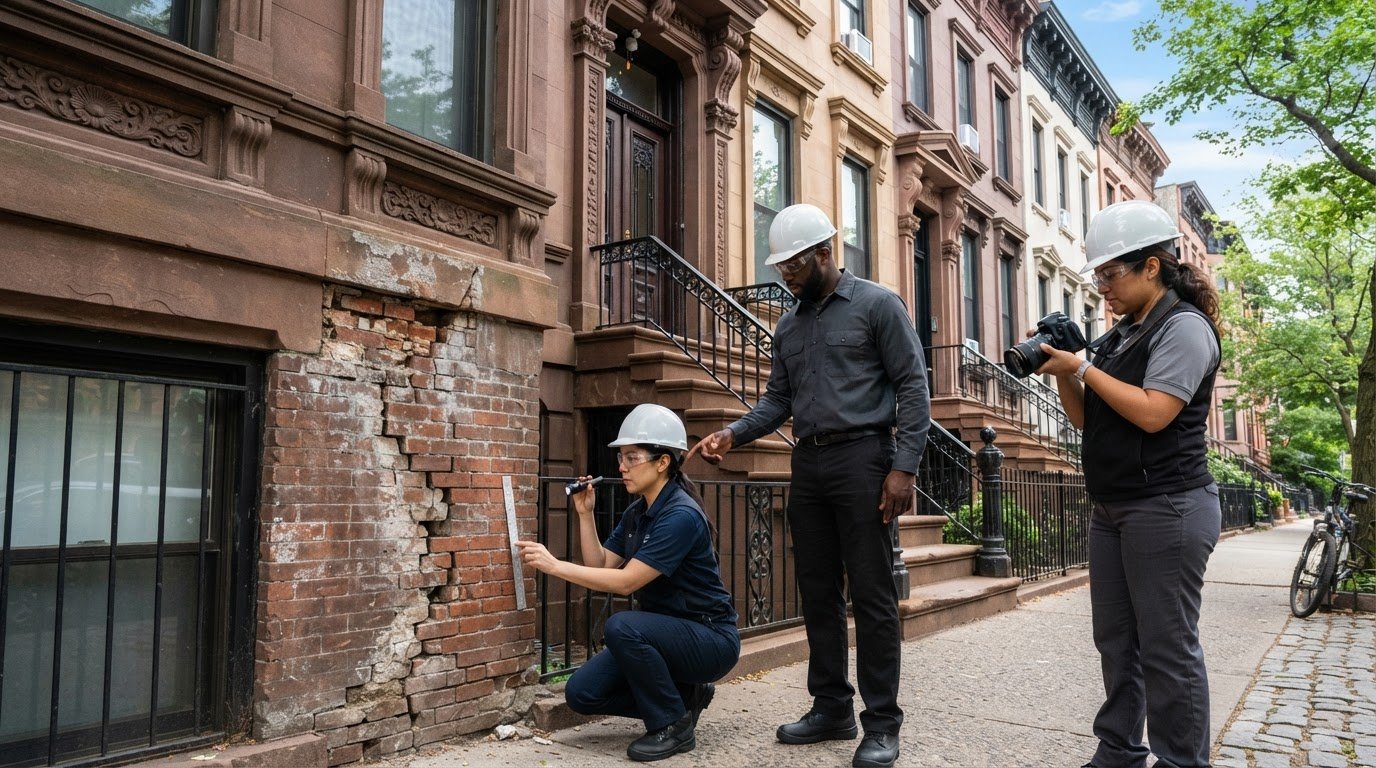
What if the crack that looks most alarming isn’t the one that needs the most urgent attention? A visible split can be cosmetic, moisture-related, or connected to movement, and guessing at the cause can lead to the wrong fix. Facade repair for structural cracks in NYC starts with assessing the condition, not simply covering the line.
It’s reasonable to worry about loose masonry, water getting indoors, or damage spreading. A useful first step is to record the crack’s location and pattern, the condition of nearby masonry, visible moisture, and any loose material. These details help describe what needs attention, but they do not establish the cause. This article explains warning signs, what to document, and how findings can guide repairs that respect NYC masonry and historic brownstone. Facade concerns may also relate to FISP requirements for buildings taller than six stories. Progressive Contracting NY Corp provides brownstone facade renovation and masonry services in Brooklyn and Manhattan. License number 2097623-DCA.
Table of Contents
Facade Cracks in NYC: Which Signs May Point Beyond Surface Damage?
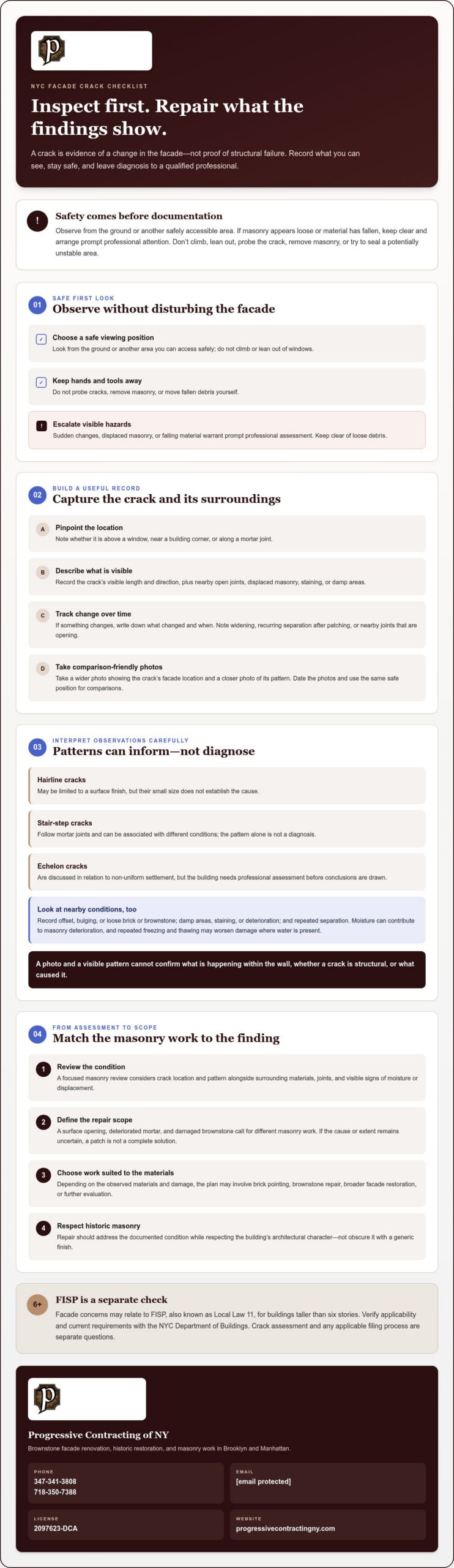
A crack is evidence of a change in the facade, not proof that the building is structurally failing. Its location, shape, surrounding masonry, and behavior over time all matter. A fine line in a surface finish may have a different explanation from a crack beside shifted brick or recurring separation at the same joint. Property owners can record what they see, but a qualified professional should assess the condition.
Moisture can enter through openings and contribute to masonry deterioration. In cold weather, repeated freezing and thawing may worsen damage where water is present. Building movement is another possible factor, but a crack’s appearance alone can’t confirm movement or its cause. Dated photos taken from the same safe position, paired with notes about nearby changes, can help show whether the visible condition appears stable or is changing.
What crack patterns can, and cannot, tell a property owner
Hairline cracks may be limited to a surface finish, but their small size doesn’t establish the cause. Stair-step cracks follow mortar joints and can be associated with different conditions; the pattern alone is not a diagnosis. Echelon cracks in building facades are one pattern discussed in relation to non-uniform settlement, but the actual building needs professional assessment before anyone draws conclusions.
When documenting a crack, pay attention to changes and surrounding conditions:
- Widening or recurring separation: Note when it appeared, whether it returned after prior patching, and whether nearby joints are also opening.
- Displacement: Record whether brick or brownstone appears offset, bulging, or loose beside the crack.
- Moisture signs: Note damp areas, staining, or deterioration near the opening, without assuming water is the only cause.
Sudden changes, displaced masonry, or falling material warrant prompt professional assessment. Keep clear of loose debris, and don’t try to seal or probe a potentially unstable area. Evaluation helps determine whether facade repair for structural cracks in NYC calls for masonry work, such as pointing or brownstone restoration, rather than a surface patch. On a historic building, the repair should address the observed condition while respecting the original masonry.
How to Inspect and Document Facade Cracks Before Planning NYC Repairs
Start your record from a safe place. Observe the facade from the ground or another area you can access safely. Don’t climb, lean out of windows, probe the crack, or remove masonry. If material appears loose or has fallen, keep clear and arrange prompt professional attention rather than moving debris yourself.
Write down where the crack is, such as above a window, near a building corner, or along a mortar joint. Describe its visible length and direction, then note nearby open joints, displaced masonry, staining, or damp areas. If you’ve noticed a change, record what changed and when. Take a wider photo to show the crack’s location on the facade and a closer photo to show its pattern, always from a safe position. Dated photos taken from the same place make comparisons more useful.
What a focused facade assessment should establish
A visual record helps describe the concern, but it can’t establish the cause. A photograph alone doesn’t show what’s happening within the wall or confirm whether a crack is structural. A focused masonry review considers the crack’s location and pattern alongside surrounding materials, joints, and visible signs of moisture or displacement. These observations help guide next steps without treating a surface patch as a diagnosis.
For buildings that may fall under FISP, also known as Local Law 11, verify applicability and current requirements with the NYC Department of Buildings. Don’t assume the rules apply based on a crack or the building’s appearance alone. The assessment of a crack and any applicable filing process are separate questions.
These records can help shape brownstone facade repair around the documented condition and character of the masonry. For facade repair for structural cracks in NYC, a careful assessment provides a clearer basis for deciding whether the next step involves pointing, brownstone repair, or further evaluation.
From Inspection Findings to Facade Repair for Structural Cracks in NYC
A repair plan should respond to the assessed condition, not follow a one-size-fits-all crack-filling method. A surface opening, deteriorated mortar, and damaged brownstone call for different masonry work. If the cause or extent of a crack remains uncertain, don’t treat a patch as a complete solution. Use the assessment findings to define the repair scope.
A measured repair path for NYC brownstone properties
For a brownstone property, the process moves from documenting visible conditions to choosing exterior work that addresses them. Depending on the materials and damage observed, a repair plan may involve brick pointing, brownstone repair, or broader facade restoration. Historic masonry calls for particular care: the work should address the condition while respecting the building’s architectural character, rather than applying a generic finish that obscures it.
Progressive Contracting of NY provides brownstone facade renovation, historic restoration, and masonry work in Brooklyn and Manhattan. The company’s exterior masonry services include brick pointing and brownstone repair, helping property owners address documented facade needs with work suited to the materials involved. Its brownstone repair information offers a closer look at this work. For crumbling or flaking masonry, the brownstone spalling repair guide covers a related facade concern.
For facade repair for structural cracks in NYC, a considered scope connects what was observed to the masonry work selected. That means distinguishing damaged joints from deteriorated brownstone and matching the repair approach to the documented condition. Clear findings help property owners understand why a particular repair is proposed and how it supports the facade’s appearance and integrity.
Move Forward With a Clear Facade Repair Plan
Once you have documented a concern, use that record to plan the building’s next steps. Facade repair for structural cracks in NYC should be guided by the condition of the masonry and a repair scope suited to the property, not a quick fix chosen before the damage is understood.
Progressive Contracting of NY specializes in brownstone facade renovation and historic restoration. The company serves property owners in Brooklyn and Manhattan, including historic brownstone neighborhoods such as Bedford-Stuyvesant and Park Slope. Its exterior masonry work includes facade restoration, brownstone repair, and brick pointing.
To discuss your brownstone facade repair, call 347-341-3808 or 718-350-7388, or email ProgressiveContractingNY@yahoo.com. License number 2097623-DCA.
A considered next step can help protect your property while preserving the craftsmanship that makes its facade distinctive.
Frequently Asked Questions
Can a crack in a building facade be structural?
Yes, a facade crack can reflect structural movement, but the crack alone can’t establish that. For facade repair for structural cracks in NYC, an assessment considers the wall and building context, not just a close-up image. If a crack aligns with a window or doorway, note its location and whether interior finishes nearby show a corresponding change. These details can help inform a professional review.
What causes cracks in a brick or brownstone facade?
Possible causes include moisture entering masonry, freeze-thaw exposure, building movement, or deterioration in brick, brownstone, or mortar. More than one factor may contribute, and a visible crack doesn’t identify which one is involved. For example, a gap along a mortar joint differs from a crack through a masonry unit, but neither appearance alone confirms the cause or dictates the repair.
Does Local Law 11 apply to my NYC building?
NYC’s Facade Inspection & Safety Program, commonly called Local Law 11, applies to buildings taller than six stories. Confirm current requirements and your property’s filing status with the NYC Department of Buildings. This guidance is relevant across Brooklyn, Manhattan, the Bronx, and Queens, including brownstone owners in Bedford-Stuyvesant and Park Slope who should verify their building’s specific status.