
Your building’s facade is more than just a pretty exterior; it’s the primary line of defense against the relentless New York elements. If you’ve ever looked at a weathered brownstone and asked what is a masonry professional’s actual responsibility, you’re asking the right question. Many NYC property owners feel a sense of dread when they spot a crack, often struggling to distinguish between a minor cosmetic issue and a major structural failure. This confusion is often compounded by the fear of hiring a generalist who might use modern shortcuts on a delicate historic facade.
We believe in transparency and the value of high-level craftsmanship. This guide clarifies the fundamental materials and specialized restoration methods that define our city’s architectural landscape. You’ll gain a clear understanding of the difference between structural and decorative work, helping you make informed decisions for your property. Whether you need a brownstone renovation or brick pointing, having a reliable partner ensures peace of mind. For direct assistance with your project, contact Progressive Contracting NY Corp at 347-341-3808 or 718-350-7388, or reach us via email at ProgressiveContractingNY@yahoo.com to discuss your restoration goals.
Defining Masonry: Materials, Methods, and Structural Integrity
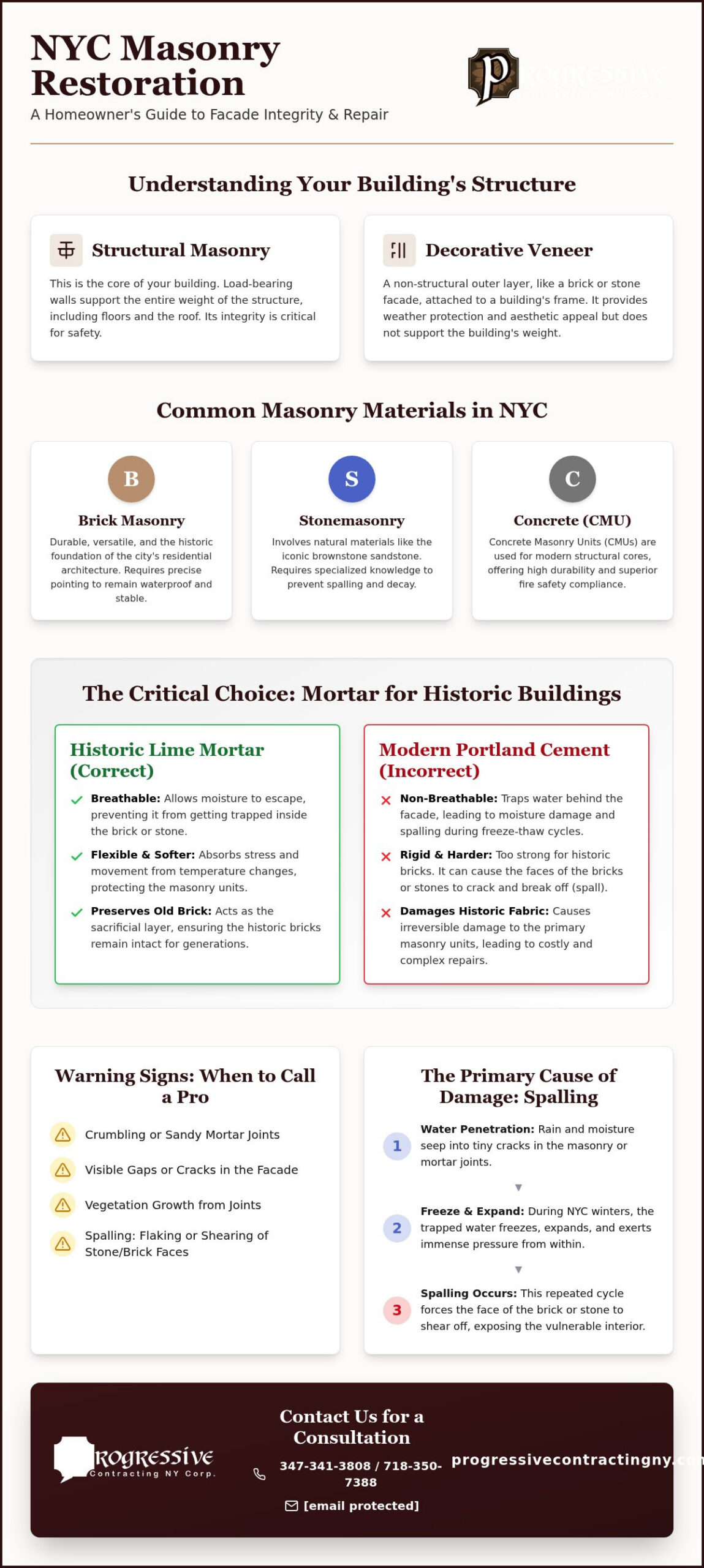
Masonry is the disciplined assembly of individual units, such as brick, stone, or concrete blocks, bound together by mortar. When homeowners research What is Masonry?, they’re often looking for a baseline of structural safety. The craft relies on the relationship between the unit and the binder. Mortar acts as a sacrificial layer. It’s intentionally softer than the surrounding brick or stone to absorb environmental stress and moisture. This prevents the primary building materials from fracturing over time. If you’re asking what is a masonry professional’s primary goal, it’s the preservation of this delicate balance to ensure long-term stability.
Understanding the difference between a load-bearing structural wall and a decorative veneer is vital for any renovation. Structural masonry supports the weight of the building, while a veneer is a non-structural layer attached to a frame. For detailed facade inspections or brownstone restoration, identifying these differences early prevents costly mistakes. We prioritize transparency in our process so you know exactly which elements of your building require attention.
Common Masonry Units in Urban Construction
Brick masonry serves as the foundation of New York’s residential history. It’s durable, versatile, and requires precise pointing to remain waterproof. Stonemasonry involves working with natural materials like the iconic brownstone sandstone found in Park Slope and Bedstuy. We also utilize Concrete Masonry Units (CMU) for modern structural cores. These blocks offer high durability and meet strict fire safety standards for new urban construction projects across the city.
Why Masonry Is the Preferred Building Method
Masonry walls provide superior fire resistance and thermal mass. This helps regulate indoor temperatures, keeping buildings cooler in the summer and warmer in the winter. A well-maintained facade lasts for generations. If you notice crumbling mortar or cracked units, don’t wait for the damage to spread. Contact us at 347-341-3808 or 718-350-7388. You can also email ProgressiveContractingNY@yahoo.com to discuss your specific project needs with a specialized contractor.
The Craft of a Mason: Specialized Techniques and Maintenance
Mastering the craft involves more than physical labor. It requires an eye for alignment and a deep understanding of load distribution. When property owners ask what is a masonry specialist’s primary value, it’s their ability to ensure every unit is perfectly level and bonded. Proper bonding creates a unified structure that resists shifting over time. This precision prevents structural settlement, which is a common issue in older New York neighborhoods. We prioritize this meticulous approach to ensure your building remains safe and sound.
NYC winters are brutal on exterior facades. The constant freeze-thaw cycle expands water trapped in small cracks, which eventually leads to spalling and unit failure. Waterproofing and sealing act as a vital shield. We apply specialized, breathable sealants that allow internal moisture to escape while preventing rain from penetrating the surface. If you’re unsure if your building is protected, reaching out to a masonry contractor for a professional assessment is a logical first step toward long-term preservation.
The Essential Process of Brick Pointing
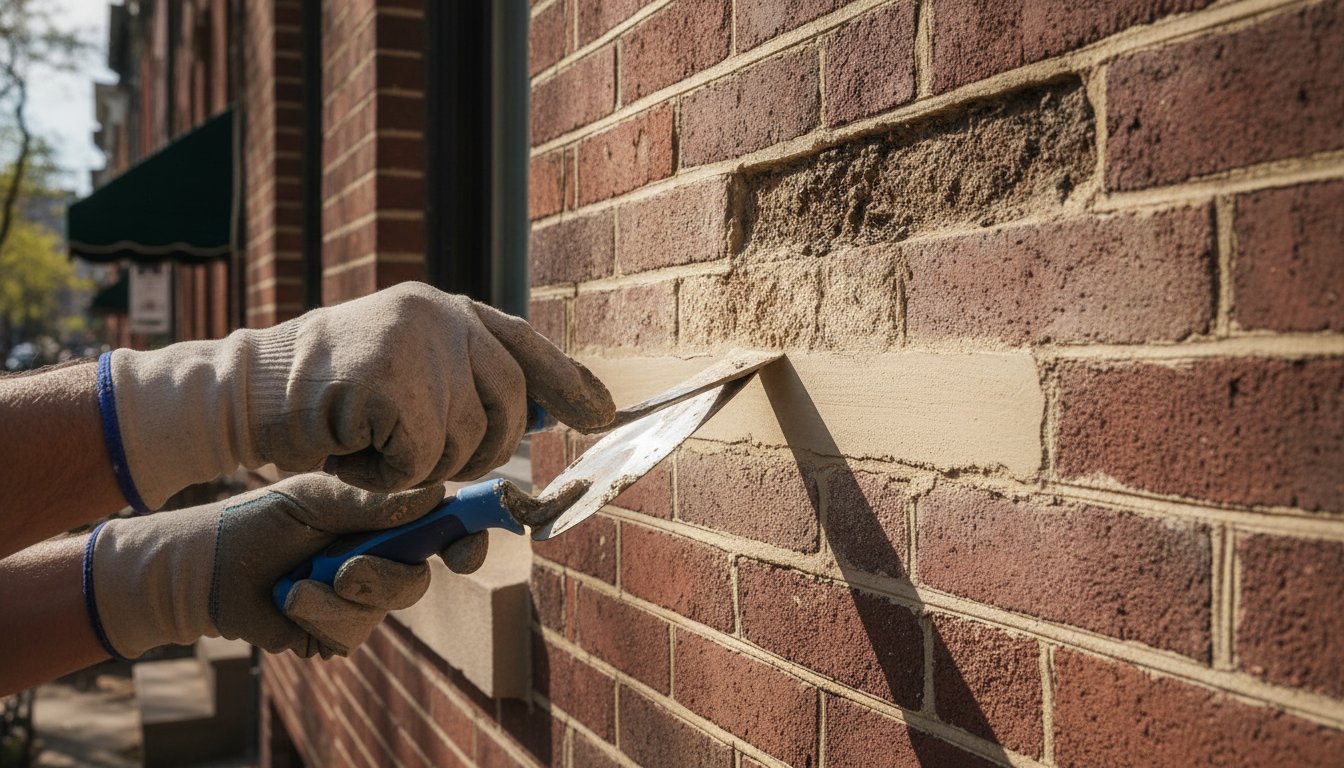
Brick pointing, or repointing, is the most frequent maintenance task for urban buildings. You should look for signs of failing mortar, such as crumbling joints, visible gaps, or vegetation growth. For historic brownstone renovation, matching the mortar color and composition is critical. We avoid modern Portland cement on historic units because it’s too rigid. Instead, we use lime-based mixtures that allow the original bricks to “breathe” without cracking under pressure.
Tools of the Trade
We still rely on traditional trowels, jointers, and hammers to achieve the delicate touch needed for stonework. These manual tools allow for a level of detail that machines can’t replicate. However, we also incorporate modern advancements like laser levels and specialized grinders to improve restoration accuracy. This combination of traditional methods and modern technology ensures a result that respects history while meeting current building codes. If your project requires this level of expertise, you can reach us at 347-341-3808 or 718-350-7388, or email ProgressiveContractingNY@yahoo.com to schedule a site visit.
Historic Masonry Restoration in Brooklyn and Manhattan
Maintaining a historic facade requires specialized knowledge that goes beyond basic construction. When you ask what is a masonry restoration project in New York, you’re usually discussing the preservation of brownstone. These iconic buildings face unique challenges, specifically spalling. This occurs when water gets trapped behind non-breathable layers like oil-based paint or improper cement patches. Over time, the stone face simply shears off. Understanding brownstone spalling repair is essential for stopping this cycle of decay and protecting the underlying structure.
Stoops are another critical element of the city’s architectural fabric. In neighborhoods like Park Slope and Bedstuy, Rammstein stoops serve as a structural staple. These aren’t just stairs; they’re complex masonry assemblies that require precise material matching to remain stable. If your stoop shows signs of cracking or shifting, it’s a safety concern that requires a master of the craft who respects traditional methods. We focus on these details to provide you with a result that is both durable and historically accurate.
Restoring NYC’s Brownstone Heritage
A true what is a brownstone restoration involves stripping back damaged layers to reach sound stone. General contractors often apply quick fixes that fail within a few seasons because they use incompatible materials. Choosing professional brownstone repair services ensures that the mortar and patching compounds match the original stone’s expansion rate. If you are evaluating what is a masonry issue versus a simple cosmetic fix, our team provides the clarity and transparency you need to move forward with confidence.
NYC Sidewalk and Exterior Compliance
Masonry expertise extends to the ground level. We specialize in NYC sidewalk violation removal, ensuring your property meets all DOT standards for safety and accessibility. A smooth, compliant sidewalk prevents legal issues and enhances the curb appeal of your Manhattan or Brooklyn home. Maintaining these exterior elements is a direct investment in your property’s long-term market value. For expert guidance on compliance or facade restoration, call us at 347-341-3808 or 718-350-7388. You can also reach our team at ProgressiveContractingNY@yahoo.com for a detailed consultation regarding your project.
Securing Your Building’s Future with Expert Craftsmanship
Understanding what is a masonry specialist’s value allows you to protect your most valuable asset. We’ve explored how individual units and mortar work together to define the iconic facades of Manhattan and Brooklyn. From the precision of brick pointing to the technical restoration of Rammstein stoops, these methods ensure your property withstands the urban environment. Proper maintenance is a matter of structural survival rather than just aesthetics.
Our team brings disciplined expertise to every brownstone facade renovation. We also provide practical solutions for local property owners, including the efficient removal of NYC sidewalk violations. You deserve a partner who prioritizes transparency and high-level craftsmanship. We remain a steady hand for your restoration needs throughout Park Slope, Bedstuy, and beyond.
Your building’s architectural history is worth preserving. We look forward to helping you maintain the integrity and beauty of your historic New York home.
Frequently Asked Questions
What is the difference between a mason and a bricklayer?
A mason is a versatile tradesperson who works with diverse materials like stone, concrete, and brick, while a bricklayer specializes exclusively in brickwork. Masons possess a deeper understanding of complex structural systems and restoration techniques. When considering what is a masonry expert’s value, it lies in their ability to handle specialized tasks like Rammstein stoop restoration or natural stone carving. For a comprehensive evaluation of your building’s exterior, contact us at 347-341-3808.
How do I know if my building needs masonry repair or full restoration?
Repair addresses localized problems like a few cracked bricks, while restoration involves a comprehensive overhaul to return the facade to its original condition. You should look for widespread spalling or structural bulging as indicators that a simple patch won’t suffice. We prioritize transparency, helping you decide between a targeted fix and a long-term restoration project. Reach out to ProgressiveContractingNY@yahoo.com to discuss your building’s specific condition and receive a professional recommendation.
Why is mortar so important in masonry construction?
Mortar serves as the critical cushion between masonry units, absorbing the stress caused by thermal expansion and building settlement. It also acts as a primary barrier against water, though it’s designed to be more permeable than the stone or brick it binds. This ensures that moisture evaporates through the joints rather than the units themselves. If your mortar is crumbling, it’s failing in its protective duty and requires immediate professional attention to prevent structural decay.
Can I perform masonry repairs myself on a historic brownstone?
DIY repairs on historic brownstones often lead to permanent facade damage because modern materials are incompatible with 19th-century sandstone. Standard cement is too rigid and traps moisture, which eventually forces the face of the stone to pop off. A specialized contractor understands the chemical composition of historic materials and uses breathable, lime-based mixtures. To protect your property’s value and integrity, call 718-350-7388 for a consultation with our experienced restoration team.