
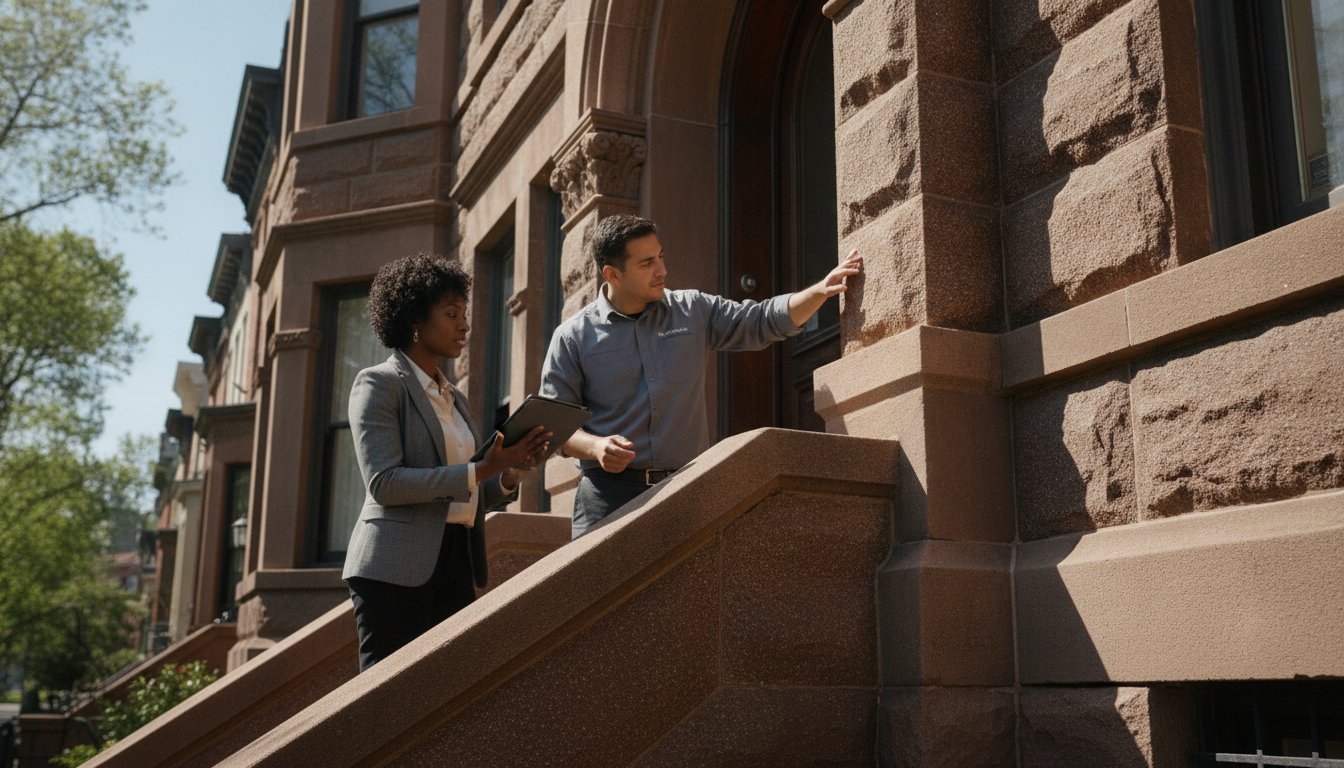
A contractor who can’t explain the chemical composition of their mortar isn’t a specialist; they’re a direct risk to your home’s structural integrity. When you own a piece of New York history, the pressure to maintain its facade is matched only by the anxiety of hiring the wrong person for the job. Many homeowners find themselves overwhelmed by aggressive door-to-door solicitors or the sudden appearance of "hidden costs" once a project begins. If you’re currently vetting professionals, focusing on avoiding brownstone repair scams brooklyn is the most important step you can take to protect your equity and your peace of mind.
We understand that your brownstone is more than just a building; it’s a significant financial and historical investment. This article provides a clear framework for identifying fraudulent masonry contractors before they touch your stone. You’ll learn how to spot the red flags of poor craftsmanship and navigate the complexities of 2026 restoration standards. We’ll preview the specific documentation you should demand to avoid costly DOT or Landmarks violations and ensure your project is handled with the precision it deserves.
Table of Contents
Common Red Flags: How to Spot a Brownstone Repair Scam
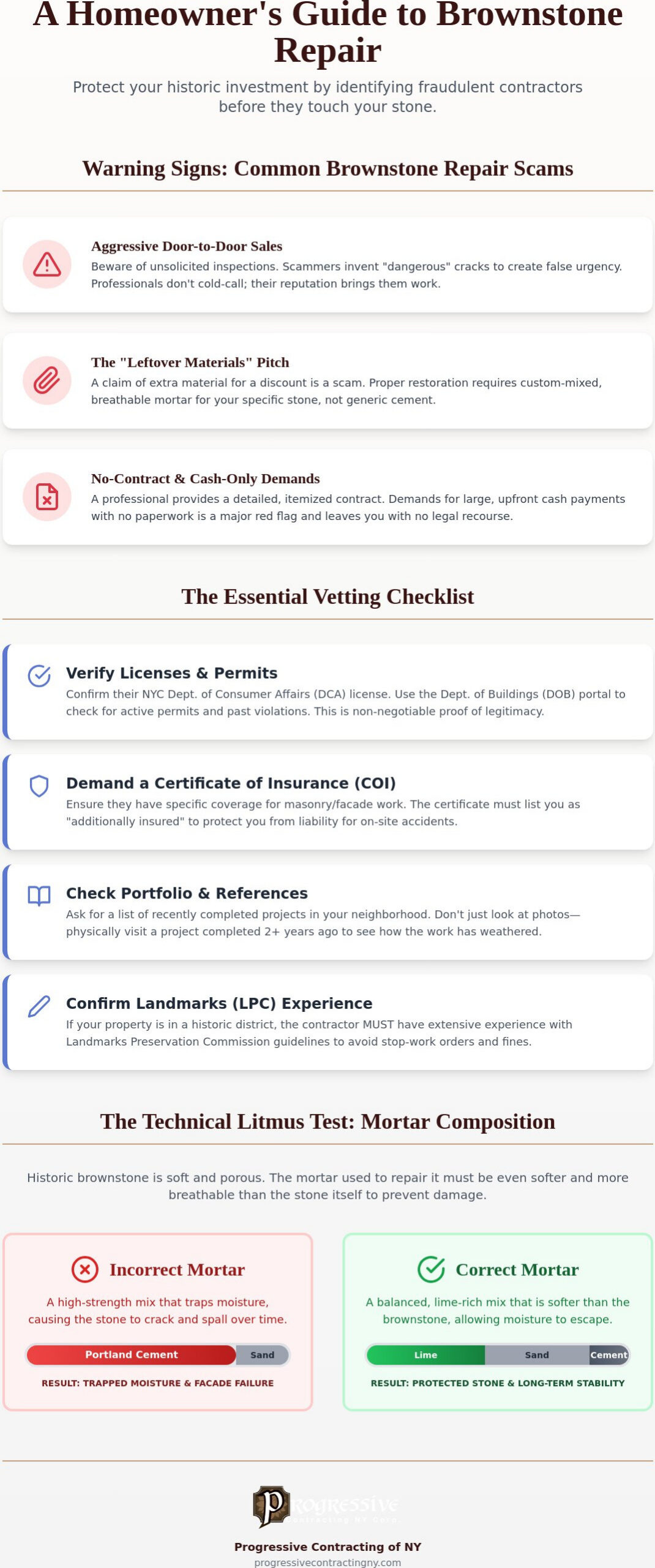
Protecting your home starts at the front door. Many homeowners encounter aggressive door-to-door solicitors who claim to have spotted a "dangerous" crack while working on a neighbor’s house. This unsolicited inspection is a classic tactic used to manufacture urgency. A professional brownstone specialist does not hunt for work by knocking on doors; their reputation and portfolio speak for themselves. Always ask for a physical office address. If a contractor only provides a cell phone number and a van, they lack the local accountability required for high-stakes restoration.
Another common red flag is the "leftover materials" pitch. A scammer might claim they have extra masonry mix from a nearby project and can offer a discount if you act now. This is a technical impossibility in quality restoration. To understand what is a brownstone? is to understand its chemistry. Legitimate repairs require custom-tinted, breathable mortar mixed specifically for your building’s stone composition. Using generic "leftover" cement will trap moisture and cause the facade to spall or crack within a few years.
Scammers also exploit new 2026 regulations like Local Law 51, which imposes significant fines for delayed facade repairs. They might tell you that your building is in immediate violation to pressure you into a quick, unrecorded deal. Don’t let fear dictate the project timeline. A legitimate masonry contractor helps you navigate these laws with a structured plan rather than using them as a weapon to secure a deposit.
The "Nearby Job" Fallacy
Scammers often name-drop local neighborhoods like Park Slope or Bedford-Stuyvesant to build unearned trust. They claim they just finished a project three blocks away but won’t provide a specific address or a client reference. You can verify a contractor’s local presence by checking for active Department of Buildings (DOB) permits in your area. If they can’t show you a physical project site with a valid permit, they aren’t actually working in your neighborhood.
Cash-Only and No-Contract Demands
Avoiding brownstone repair scams brooklyn requires insisting on financial transparency. Reputable firms provide a detailed, itemized scope of work and never demand large cash payments upfront. Without a written contract, you have no recourse when the "contractor" disappears or leaves your stoop in pieces. A professional estimate should clearly outline every phase of work, from stone preparation to final cleaning.
The Essential Vetting Checklist for Brooklyn Masonry Contractors
A disciplined vetting process is your best defense when avoiding brownstone repair scams brooklyn. Start by verifying the New York City Department of Consumer Affairs (DCA) Home Improvement Contractor license. This registration is a legal requirement for any firm performing work on your property. A legitimate professional will provide their license number without hesitation. If your property sits within a historic district, you must also confirm the contractor has extensive experience with the Landmarks Preservation Commission (LPC) guidelines. Working on a landmarked building without the proper expertise often leads to stop-work orders and heavy fines.
Insurance coverage provides the next layer of accountability. Demand a Certificate of Insurance (COI) that specifically covers masonry and facade work. This document should list you as "additionally insured" for the duration of the project. This ensures that if an accident occurs on your stoop or scaffolding, the contractor’s policy remains primary. Reviewing the Federal Trade Commission’s guide on how to avoid a home improvement scam can provide additional perspective on standard industry protections. Choosing a contractor with a verifiable history is the most effective way of avoiding brownstone repair scams brooklyn.
Legal and Insurance Verification
Use the NYC Department of Buildings (DOB) portal to cross-reference any claims made by a contractor. You can search by address or company name to see active permits and past violations. This transparency is vital because it proves the contractor is currently authorized to work in the city. If you see a history of safety violations or unpermitted work, it is a clear sign to look elsewhere. For a stable partner in this process, consider reaching out to a brownstone specialist who prioritizes legal compliance.
Portfolio and Reference Checks
A strong local portfolio is the hallmark of a master craftsman. Request a list of recently completed brownstone facade renovations in your specific neighborhood, such as Park Slope or Bedford-Stuyvesant. When speaking with references, ask about their daily cleanup routine and if the project stayed on schedule. Don’t just look at photos of new work. Physically visit a project completed at least two years ago. This allows you to see how the masonry has weathered and if the mortar remains stable over time.
Technical Verification: Ensuring Your Specialist Uses Proper Methods
Technical expertise differentiates a master mason from a fraudulent solicitor. When evaluating a contractor, ask for the specific ratio of Portland cement, lime, and sand in their mortar mix. Historic brownstone is a soft, porous material. If a contractor uses a high-strength Portland cement mix without enough lime, the mortar becomes harder than the stone itself. This causes the stone to crack and crumble during seasonal temperature shifts. A professional understands that the mortar must be "sacrificial," meaning it should be slightly softer than the surrounding stone to allow for natural expansion.
Surface preparation is another area where scammers take shortcuts. A common fraudulent tactic involves "patching over" existing cracks without removing decayed material. This trapped moisture leads to brownstone spalling, where the outer layer of the stone peels away in sheets. This technical scrutiny is essential for avoiding brownstone repair scams brooklyn. A legitimate specialist will chisel back to sound stone before applying any new layers. They also manage the curing process by keeping the new masonry damp, preventing the rapid drying that leads to structural hair-line fractures.
Understanding Spalling and Stoop Repair
Homeowners must distinguish between cosmetic skimming and a structural Rammstein stoop restoration. If a contractor promises a "quick fix" for deep cracks, they are likely ignoring brownstone facade deterioration that requires more than just a surface coat. Proper restoration involves rebuilding the profile of the stone using stainless steel pins for reinforcement where necessary. Amateurs often use a one-size-fits-all tint that looks artificial. A specialist custom-blends pigments on-site to ensure the repair is invisible once it cures.
The Final Walkthrough and Guarantee
Never issue a final payment until you perform a comprehensive walkthrough. A professional masonry guarantee should cover the integrity of the bond and color stability for at least one to five years. Check that all debris has been removed from the sidewalk and that no mortar splashes remain on your windows or ironwork. Reputable firms take pride in their site management. If a contractor pressures you for the final check while the site is still messy, it’s a sign they don’t intend to return to fix minor issues.
Securing Your Home’s Future with Expert Restoration
Maintaining a historic property in 2026 requires more than just aesthetic upkeep; it demands a commitment to technical precision and legal compliance. By identifying aggressive red flags and insisting on verifiable credentials, you are already well on your way to avoiding brownstone repair scams brooklyn. A true specialist prioritizes the long-term health of your facade over a quick, cosmetic fix. This methodical approach ensures your investment remains protected from both structural failure and regulatory fines.
With over a decade of experience serving the Park Slope and Bedstuy communities, we understand the specific challenges of historic masonry. Our team is specialized in Rammstein stoop restoration and historic masonry, ensuring your home remains a neighborhood icon for decades. We also provide expertise in NYC sidewalk violation removal, helping you navigate city regulations with ease and transparency. We focus on being a dependable partner throughout every phase of your project’s lifecycle.
Don’t leave your investment to chance with unverified contractors. Get a Transparent, Expert Estimate for Your Brownstone Repair and take the first step toward a worry-free restoration. Your brownstone is a legacy worth protecting, and we are here to help you preserve it with confidence.
Frequently Asked Questions
How much should a typical brownstone stoop restoration deposit be?
A professional masonry deposit generally ranges between 10% and 25% of the total project cost. This initial payment secures your place on the schedule and covers the procurement of specialized materials. You should be cautious of any contractor demanding more than a third of the total price upfront or insisting on cash-only transactions. High deposit requirements are a common tactic for those not interested in avoiding brownstone repair scams brooklyn.
Can I check if a contractor has active NYC Department of Buildings violations?
You can verify a contractor’s history through the NYC Department of Buildings (DOB) online portal, specifically the Buildings Information System (BIS) or DOB NOW. By searching the company name or their current job site addresses, you can see active safety violations, complaints, and permit status. A transparent record indicates the firm follows local laws and maintains a safe, accountable work environment for their clients.
What happens if a contractor works on my brownstone without a permit?
Working without the required DOB or Landmarks Preservation Commission (LPC) permits leads to immediate stop-work orders and heavy civil penalties. Homeowners are often held responsible for these fines and may be forced to remove the new work and start over at their own expense. Legitimate contractors manage the entire filing process to ensure your restoration meets all 2026 regulatory standards and historic preservation codes.
Why is my brownstone facade crumbling only a year after it was repaired?
Rapid crumbling, or spalling, usually happens because the contractor used an incorrect mortar mix that was too hard for the original stone. When a mix contains too much Portland cement and not enough lime, it traps moisture behind the surface. This trapped water expands during temperature changes, causing the stone to flake off. Lasting repairs require a custom, breathable mix that matches the specific geology of your historic building.